Challenging conflict and traditional discipline with high accountability and high support.
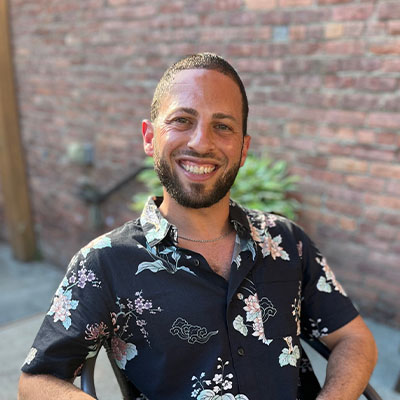
Sam Aronowitz, 2026 Graduate Certificate in Restorative Practices alumnus, serves as principal's assistant at an urban alternative middle and high school in the state of New York. Many of the students he serves have high ACE (Adverse Childhood Experiences) scores and come from disenfranchised backgrounds. In this non-traditional setting, restorative practices offer students and educators the space to address individual needs, find unique solutions to conflict, and apply interventions that enhance the learning experience.
Sam is passionate about restorative practices and the impact they have on his students and fellow educators. He is dedicated to sharing his learning with his team of educators and students.
Q: What brought you to the IIRP?
A: Throughout my 15-year career, I have worked with students who have intense social-emotional and behavioral needs in self-contained middle schools, a Title 1 elementary school, and now an urban alternative middle and high school. I have helped students become more self-aware, develop coping strategies, and mediate conflict. In addition, I've assisted teachers in fostering a strong sense of classroom community. All the while, I strongly desired to grow professionally and hone my skills. I just didn't know where to put this passion. I was introduced to restorative practices through the IIRP’s professional development event, Restorative Practices for Educators. It clicked; I had found something that would help me be a better practitioner, person, partner, and father. I enjoyed my coursework and aim to impart much of what I have learned to my colleagues.
Q: Please tell us about your professional work now and what makes you passionate about it.
A: As an administrator at an alternative urban school, I see a great deal of conflict. With a history of traditional consequences, we are looking closely at our suspension data. We strive to be a restorative practices school, have a restorative practices committee, and start our day with schoolwide Tier 1 community-building circles. I facilitate my team meetings in a circle. I strongly believe in high accountability and high support. I believe that a lack of consequences enables negative behavior and that reparative and teachable consequences make lasting change.
Q: What would you like to see happen in the future of this work?
A: I would like educators to better understand that restorative practices go beyond Tier 1 community-building circles; these practices include appropriate consequences, leadership philosophies, repairing harm, providing voice, and opportunities for agency. I would also like to see families more exposed to restorative practices, utilizing them at family conferences, suspension reentry, and beyond.