Finding hope and discovering new ways to belong through restorative practices
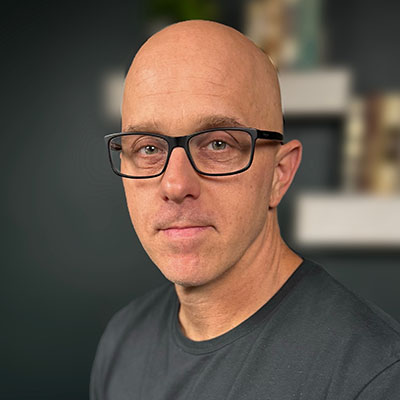
IIRP alumnus Daniel Hood is a business and executive coach for individuals and organizations focused on relational leadership and improving workplace culture. Through his business, Kova Coach, he provides one-on-one executive coaching and facilitates workshops on building resilience and emotional intelligence in the workplace. He is passionate about leading organizations towards proactive culture building that centers human dignity.
Q: What brought you to the IIRP?
A: Two events led me to the IIRP. First, I was talking to my cousin at Thanksgiving a few years ago about how I wanted to earn a master’s degree but hadn’t found the right program yet. She was in the IIRP degree program at the time, and she introduced me to the IIRP that day.
The second piece of the story is connected to an experience I had within my community. At the time, I was in the ministry of my local church. I had gotten to a place where the board and I disagreed on the future of the church, I had some theological questions, and I was starting to question how we operated. This led to me being asked to resign on stage in front of the congregation. They also told everyone that they were removing fellowship from my wife. We were shunned and shamed in front of our closest community. This event drove me toward restorative practices. I said, “There has to be a better way to handle conflict and disagreements than this.” My interest in the IIRP and restorative practices really grew out of my own story, a desire to understand more of what happened in my situation, and seeing a chance to bring hope in a different way of handling things in the future.
Q: Please tell us about your professional work now and what makes you passionate about it.
A: It connects back to my own story and experiencing that feeling of what it's like to lose my sense of belonging, my voice, and my agency. I got stuck in shame for a couple of years and lost my own sense of what I could do in the world. That experience really fuels me to help individuals and organizations create a culture where human dignity is upheld, where people feel a sense of belonging, agency, and voice. I want professionals to have a sense of accountability and personal goals and to show up as their best selves when facing challenges and when challenging others. I want them to think, “I have support, I have a good workplace culture, and I have a coach who's helping shape leaders who know how to connect relationally, not just tell me what to do.” That is what drives me; I want to create that resilience in people and teams.
Q: What would you like to see happening in the future of this work?
A: I hope to bring restorative practices, principles, mindsets, and methodologies into the workplace. Now, there's a lot of fear in organizations, attempts to avoid uncertainty and uncomfortable conversations, and concern of crossing lines that could result in legal action against a business. There's fear around creating transparency in an organization, and that fear is what is driving a command-and-control culture.
I want to be the voice that asks leaders to lean into curiosity and uncertainty, embrace the difficult questions, consider new perspectives, and broaden their understanding of what they and their employees are capable.
Q: What are the most impactful learnings from your graduate courses that you are taking with you into your personal and professional life?
Dr. Frida Rundell’s Relational Care Ladder (RCL) and all of the insight she provides around narrative have deeply impacted both my work and my personal experience. I use an adaptation of the RCL when I work with business leaders and am doing narrative facilitation with them during one-on-one coaching. On the personal side, taking Dr. Rundell’s course was healing for me as I processed my experience with the church. Working through her classes was also caring for myself.
Dr. Doug Judge’s classes on implementation were also very impactful, especially digging into Immunity to Change. Now I use the Immunity to Change exercise with leaders. It provides them with a framework to uncover their fears and unconscious assumptions through a supportive tool that helps them process.
What I experienced in the past is not something I would wish on an enemy, and it was the most transformative thing that's happened to me. Suffering can either be our greatest teacher, or it can be the turn us bitter, resentful, and afraid. It can invite us into a deeper awareness of self and others and cause us to ask difficult questions and to wrestle with the beliefs with which we were raised.
What I loved about my experience at the IIRP is that, because of the readings and the people I got to learn with, I got to look through the lens of people who viewed the world differently than me, and it was the most beautiful, difficult, transformative experience ever.