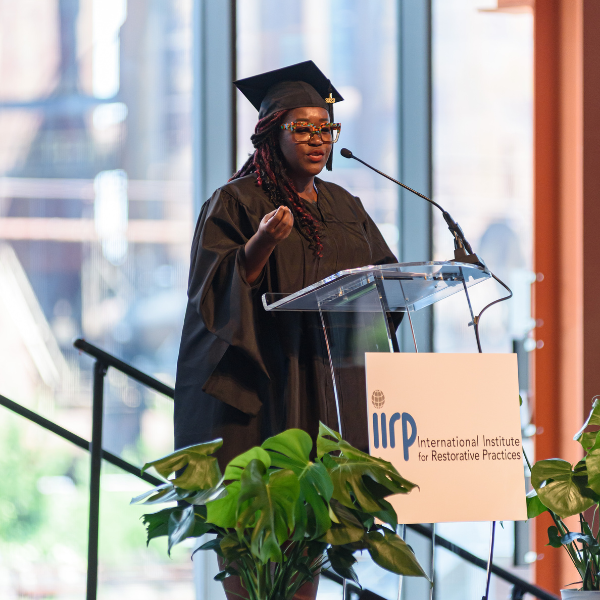
Become a compassionate leader, empathetic listener, and community builder.
Graduate students at the IIRP are catalysts for change, putting what they’ve learned into practice across professional settings. Our graduates problem-solve in a way that fosters cohesion and creates conditions for collaborative teamwork.
Program at a Glance
⏱ Completion Time: 24-36 Months
💻 Format: 100% online with blended options
📚 Number of Courses: 10
📅 Start Terms: Fall, Spring, Summer
✅ Program Cost: $18,660
Why Choose This Program?
- Blend relational, advanced communication, and leadership strategies to help you build authentic connections, mentor others, and influence systems.
- Gain education that is rooted in community building and healing, cultivating change through relationships, respect, partnership, inclusive voice, agency, and a sense of belonging.
- Access flexible online delivery for working professionals with transparent, affordable tuition with payment plan options, no hidden fees.
- This program is perfect for aspiring changemakers seeking purpose-driven leadership.
- As a transdisciplinary field, the study of restorative practices draws insights from a range of disciplines, including sociology, psychology, anthropology, and social work, as well as other relevant fields.
- Build your own path within the degree program, concentrate on specific fields, specializations, or add the thesis option.
What You'll Learn
- A practical curriculum you can apply in your work now, exploring restorative practices through a broader lens,
- How to lead people more effectively and build high-functioning and resilient teams through a focus on responsibility, respect, and inclusive participation, sparking creativity and innovative ways of thinking,
- The skills to uncover the root causes of conflict and facilitate complex conversations to minimize harm, repair relationships, and identify solutions,
- Critical thinking and communication skills to become more adept at influencing change, and
- Skills in emotional intelligence, self-reflection, and conflict management, equipping you to proactively build more effective relationships and positive community culture.
Program Overview
This program requires ten courses: four required courses and six electives. Courses taken to complete any of the graduate certificate programs count toward the Master of Science degree.
- RP 500 Basic Restorative Practices or RP 504 Foundations of Restorative Practices
- RP 525 Restorative Practices in Action
- RP 610 Evaluation of Research or RP 680 Designing Restorative Practices Research
- Six general electives
- RP 699 Integrating Seminar (once all other coursework is complete)
There are no additional costs associated with choosing a specialization for your Master of Science in Restorative Practices. Click here for our Transparent Tuition.