Lindsey Pointer, Ph.D.
Abstract: This paper explores the crucial role of narrative change in advancing the restorative justice movement, with a particular emphasis on the role of artists and storytellers.
Grounded in theories of narrative and artistic activism and drawing on specific examples of visual art, fiction, and creative non-fiction that communicate restorative justice, this paper considers the important work of imagining the world we are trying to build—and drawing others into the promise and possibility of that imagination in order to make it real.
Pointer, L. (2025, Summer). Expanding our public imagination of justice: the role of artists and storytellers. IIRP Presidential Paper Series, 12, 1-20.
ABSTRACT
This paper explores the crucial role of narrative change in advancing the restorative justice movement, with a particular emphasis on the role of artists and storytellers. Grounded in theories of narrative and artistic activism and drawing on specific examples of visual art, fiction, and creative nonfiction that communicate restorative justice, this paper considers the important work of imagining the world we are trying to build—and drawing others into the promise and possibility of that imagination in order to make it real.
INTRODUCTION
This morning, my almost-4-year-old son was deep in thought on our drive to preschool. “Are there bad guys in real life?” he asked me. He was picturing the villains from countless children’s books and movies, so many stories he has already engaged with in his first few years of life. I replied that there aren’t any bad people, but people can do bad things that harm others, and that usually means they are hurting in some way too. Our family has a few stories (books and movies) we love that help to reinforce that more restorative message, but I was struck in the moment by the overwhelming quantity of children’s stories that reinforce the “there are bad people who need to be punished” narrative. The prevalence of these stories only increases as we move from childhood on to adulthood, even as we engage with more and different forms of media.
For many of us who have lived our lives immersed in a punitive and hierarchical cultural context, restorative justice is a significant paradigm shift. Challenging core cultural assumptions about what justice is and how we ought to understand and relate to each other requires a deep change in our mindset. Because this shift is so significant, we must be attentive to the work of expanding the public imagination in our collective efforts to spread understanding and implementation of restorative justice approaches. When we hear the word justice, what can we imagine? Is it simply, as so many novels, television shows, movies, and news stories have encouraged us to believe, a matter of finding the “bad guy” and doling out punishment, incapacitating them via incarceration, or making them “pay” for what they have done through some other punitive mechanism? Or can we be intentional about generating new narratives that allow us to imagine justice as something more?
In this essential effort to expand the public imagination of justice, there is perhaps no role more crucial than that of the artists and storytellers. As author and restorative justice practitioner Charlene Allen said, “It takes a lot of imagination at this stage because the dominant narrative is so prominent, it is so deep in us, it is so well-done, it is so old, it is so big. It comes through so many sources and avenues.” Stories “help us imagine something so much bigger and better than what we have now” (National Center on Restorative Justice, 2024). Restorative justice needs art to “ignite the restorative imagination” and to advance understanding and implementation of restoration justice theory and practice (Pointer & Pali, 2022).
This paper investigates the crucial role of narrative change in advancing the restorative justice movement, with a particular emphasis on the role of artists and storytellers. Restorative justice is a social movement, and there is a role and a need for all sorts of perspectives and skillsets in growing this movement. Here, however, we will look at the particular power of artists and storytellers in imagining the world we are trying to build—and drawing others into the promise and possibility of that imagination in order to make it real.
THE NEED FOR NARRATIVE CHANGE: ENGRAINED CULTURAL BELIEFS
To expand the public imagination of justice, we need to first understand narrative change. Narrative is a word that is used across a wide variety of disciplines including literature, psychology, sociology, and journalism, with varying definitions. In this paper, I am referring to ideologies or cultural beliefs, the stories we construct to explain our reality. Fiction, nonfiction, art, and any creative medium can either reinforce or subvert mainstream cultural constructs.
All discourse involves premises about the world, and in everyday culture, dominant worldviews are often presented as universal truths. These hegemonic ideas appear again and again in a wide range of media and are often unconsciously reinforced. Consequently, media, including art and literature, can become an arena of the social “struggle over meaning” (Hall, 1982, p. 77).
Language and symbolization, the materials of writers and artists, are building blocks of culture, enabling “a specific human community to form and sustain itself” (2023, p. 15). Culture shapes personal experience and society more broadly. As Smith notes, “Culture is, in part, created through narratives. Narratives are the collection of stories we tell each other rooted in shared values and common themes that uphold a particular frame or worldview. Narratives inform the mental models that guide what laws we pass, what we deem as socially acceptable, and whose lives we value” (2023, p. 77). Therefore, we need visionary art, stories, film, poetry, and music that can move our culture toward a new, more equitable and connected paradigm (Goldbard, 2013). These creative works fuel our collective imagination.
Lederach (2005) speaks of this need for narrative change as a need for moral imagination. He asserts that “our imagination has been corralled and shackled by the very parameters and sources that create and perpetuate violence. Our challenge is how to invoke, set free, and sustain innovative responses to the roots of violence while rising above it” (2005, p. 172). While Lederach’s work is focused more broadly on violence and peacebuilding, the insights are relevant to the cycles of violence we see in justice responses as well. Creativity is key to the emergence of moral imagination (Lederach, 2005) and is a central tool for narrative change efforts more broadly. Because narrative change is such an essential strategy in social change efforts, organizations such as the Narrative Initiative have emerged as strategy hubs for changemakers, working to transform deeply held cultural beliefs and values.
In a presentation on communicating restorative justice at the National Association of Community and Restorative Justice (NACRJ) Conference in 2024, Cymone Fuller spoke about the need for narrative change work in communicating and advancing restorative justice. Fuller defined narrative as “the deeply held beliefs and values that shape the way people interpret and construct the world. An array of connected themes and ideas that tell a big story about who we are, our relationships to each other, and our vision of the future. Narrative defines what we imagine is possible, is the foundation of how we make meaning, and generates all of our communication” (Fuller, Morneau & Rozzell, 2024). In restorative justice advocacy, we must be mindful of the narratives we are reinforcing in our communications.
In her presentation, Fuller discussed the specific narrative of “public safety = law enforcement” (Fuller, Morneau & Rozzell, 2024). In other words, the presence and actions of police are what keeps people safe. This narrative is repeated and reinforced by police, news media, corporations, politicians, and through arts and entertainment. Consider the police slogan “To Protect and Serve” and the portrayal of police in the television show Law & Order or the Lethal Weapon movies. They, like many others, present law enforcement in a heroic light while most often ignoring or downplaying issues such as systemic racism, police brutality, and corruption.
In the same NACRJ presentation, Caitlin Morneau cited deeply entrenched punitive attitudes as another barrier to greater uptake of restorative justice (Fuller, Morneau & Rozzell, 2024). Like the “public safety = law enforcement” narrative, the “wrongdoing deserves punishment” narrative is pervasive. It influences many aspects of our lives—including criminal justice responses, discipline in schools, parenting approaches, workplace conflicts, and responses to harm in spiritual communities. But the story that punishment is the natural or only response to wrongdoing is not inherently true, and more importantly, it can be changed.
Transform Justice, an organization in the United Kingdom, identified several cultural beliefs that are deeply engrained and run counter to restorative justice aims. Among these are a belief in punishment and the belief that crime is a rational choice. This belief sees those who commit crimes as rational actors who are weighing the pros and cons of committing a crime before acting (Transform Justice, n.d.). Transform Justice Director Penelope Gibbs explains that this rational-actor belief, along with the related belief in deterrence (the concept that if you ramp up sanctions, you can change the decision someone will make), are not supported by evidence, but it doesn’t matter because people believe them (Gibbs, 2024). Rather than condemning these beliefs, Gibbs suggests that we need to understand them and work around them, leaning into other more helpful cultural beliefs. Transform Justice has highlighted the belief that crime has societal causes, including poverty, health issues, mental health issues, upbringing, and lack of opportunities. This cultural belief is helpful for furthering the restorative justice agenda and should be emphasized in our strategic communications (Transform Justice, n.d.). For example, sharing case stories that show the “why” behind the behavior, or how the actions grew out of a relatable need, may help people to be more open to nonpunitive responses that can actually help to meet that need.
To make this focus on the need for narrative change more concrete, I offer a short list of a few of the core cultural ideas that influence how we understand justice and justice-making in a punitive paradigm. This list includes the narrative examples referenced above as well as other cultural ideas you may recognize. As my conversation with my son showed, our narratives about justice are apparent even to a young child and so pervasive that they become like the air we breathe, easy to ignore or take for granted until we bring our attention to them.
- Law enforcement keeps us safe.
- There are villains and heroes, or “good guys” and “bad guys.”
- People who commit crimes deserve to be punished.
- Crime is a rational choice.
- Justice is “an eye for an eye.”
Restorative justice offers a set of core ideas that run counter to hegemonic conceptions of justice and offer a radically different path or direction for the work of justice-making. These include:
- Community keeps us safe.
- Hurt people hurt people, and so we need to understand and address the needs behind the behaviors.
- People who cause harm (commit crimes) have an obligation to repair that harm.
- Crime has societal causes.
- Justice is healing.
Importantly, narrative change is a long-term strategy. It focuses on elevating and establishing new values and shaping storytelling across a social movement (Fuller, Morneau & Rozzell, 2024). This cannot be accomplished through one-off efforts. Narrative change is a slow, constant, and intentional strategy of building more and more stories that spark the imagination of what a restorative approach to justice-making can look like, leaning into the core ideas I have listed and many more.
In the restorative justice movement, there is a pressing need for greater public education about restorative justice as well as an expansion of the public imagination of what justice means and what the pursuit of justice can look like. Without this broader culture change, the potential of restorative justice to truly transform criminal justice systems is stunted. This is where narrative change innovation and research are key. Imagine the movement for LGBTQIA2S+ rights without Pride, or the movement to end police brutality without Black Lives Matter. In each of these movements, the dominant narrative was shifted. In the case of Pride, the shift countered the shame and stigma historically placed on LGBTQIA2S+ identities, replacing it with a narrative of empowerment, visibility, dignity, self-expression, community, and celebration. In the case of Black Lives Matter, this narrative change strategy shifted the lens from individual misconduct by some police officers to institutional and structural violence that was part of a larger systemic problem rooted in racisms, while also centering Black humanity.
THE ROLE OF ART IN RESTORATIVE JUSTICE NARRATIVE CHANGE
In 2022, The International Journal of Restorative Justice published a special issue on the intersection of restorative justice and art, which I edited along with Brunilda Pali. In the introduction to that special issue, we wrote,
When done well, both art and restorative justice encounters can be unsettling and expanding for our views, our understanding, our affective horizon, and our imagination. In art, as in restorative encounters, we are able to transcend ready-made and taken-for-granted stock stories, dangerous classifications, and oversimplifications. Both art and restorative justice create a context for communicating complex and difficult ideas and feelings. Both bring people together in a way that is distinct from normal life and contains enormous potential for connection and transformation. (Pointer & Pali, 2022)
We chose to highlight this significant parallel between art and restorative justice in part to emphasize just how deeply transformative and powerful art can be. The special issue includes many examples of how art has been skillfully woven into the facilitation or delivery of restorative justice approaches, opening new avenues for insight, connection, and repair (Aldington, 2022; Varona Martinez, 2022; Morris, 2022). It also explores why art is an essential component of strategies to communicate restorative justice.
Art is a particularly effective way to build understanding of restorative justice because it is affective; it evokes emotion. As Patricia Leavy explains,
Free from academic jargon and other prohibitive barriers, the arts have the potential to reach a broad cross-section and to be both emotionally and politically evocative for these diverse audiences. The arts, at their best, can move people to see things in new ways. This is because the arts connect with people in sensory ways—reaching people on a level of humanness which extends far beyond the reach of the confines of any one discipline. Moreover, the arts can promote dialogue which cultivates understanding or critical consciousness, can problematize dominant ideologies, and can unsettle stereotypes. (2011, p. 106)
It is often said of restorative justice that “you have to feel it to get it.” The process has an emotional impact for participants that is difficult to communicate to those without direct experience. Art is a powerful tool in the communication of restorative justice because it engages emotions and provides ways of conveying information and experience that aren’t limited to verbal explanations (Pointer, 2025).
Art is often used in activism spaces because of the role of affect in creating effect. In exploring the relationship between art and activism, Stephen Duncombe explains that activism aims to generate an effect while art “contains a surplus of meaning: something we cannot quite describe or put our finger on, but which moves us, nonetheless. Its goal, if we can even use that word, is to stimulate a feeling, move us emotionally, or alter our perception. Art is an expression that generates affect” (2016, p. 118). This affective power is essential in activism. People do not often change based on reasoned deliberation of the available information alone, but rather by being moved to change through emotionally powerful stimuli. In this way, affect creates effect (Duncombe, 2016).
While I have always loved art and literature, my own interest in the role art could play in advancing restorative justice was first sparked by Brunilda Pali’s 2017 work on images of restorative justice. Pali highlights the lack of images of restorative justice available to help communicate its meaning. The most common image used is of a group of people seated in a circle, which does not communicate significant conceptual depth to someone new to restorative justice. She states that “art can mediate, enhance, and make tangible new and alternative understandings of the notion and practice of justice” (2017, p. 11). Pali notes that when we consider the complex concept of justice, one of the most common images encountered is that of Lady Justice, generally depicted wearing a blindfold and carrying scales and a sword. The blindfold is meant to represent impartiality, the scales signify fairness and the weighing of evidence, and the sword symbolizes the authority to punish. Restorative justice challenges the concept of justice communicated by the Lady Justice image in almost all its elements. As Pali notes, “From a restorative justice perspective, the sword, the scales, and the blindfold mainly represent the limitations of formal justice, where justice is seen as harsh, rigid, and unable to see the injuries imposed in her name” (2017, p. 5).
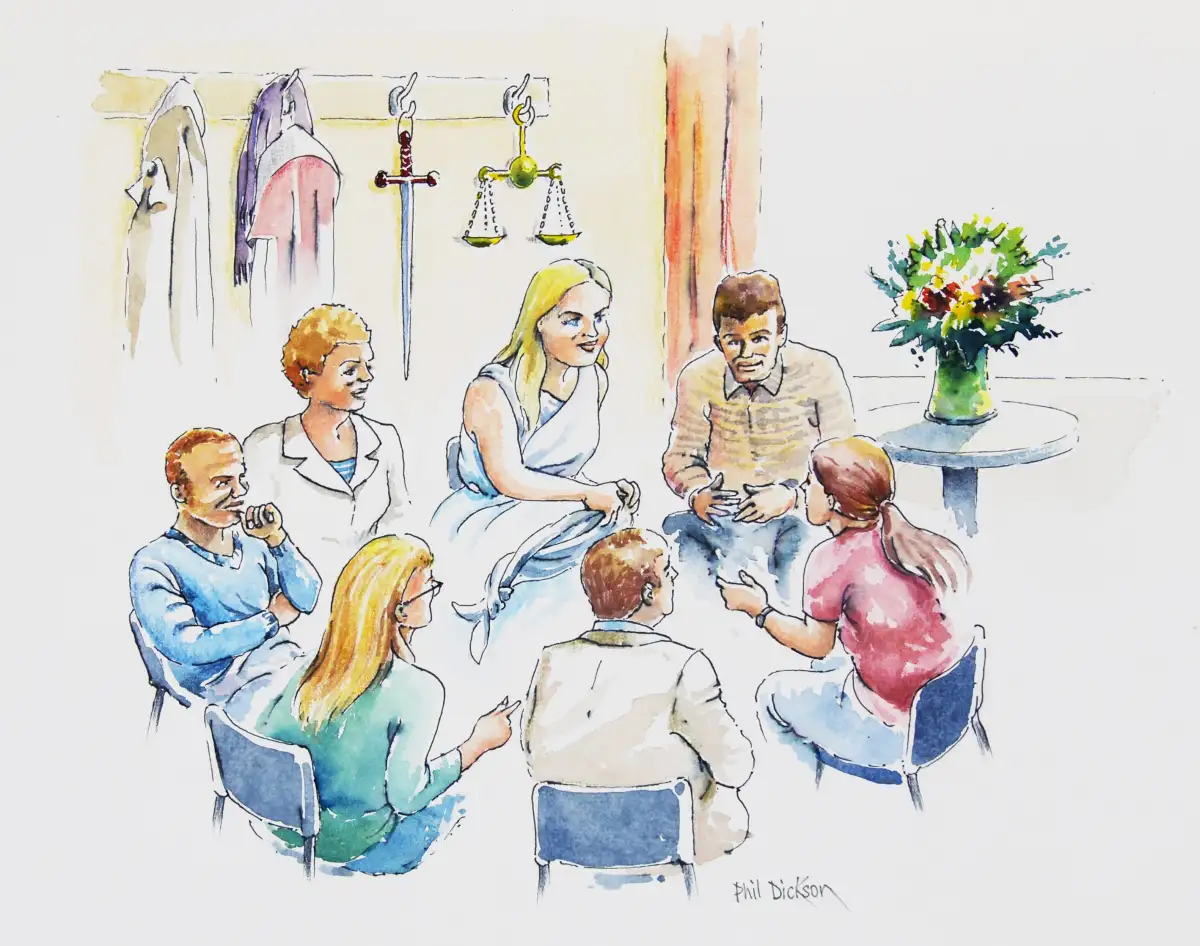
In 2020, I joined the National Center on Restorative Justice (NCORJ) team, and for International Restorative Justice Week in 2020 and 2021, we issued a call to artists and restorative justice advocates to creatively represent a restorative approach to justice-making or to advance public understanding and implementation of restorative justice through art. The images, poetry, and videos we received are now available in a gallery on the NCORJ website (https://ncorj.org/art/). The works submitted vary widely and evoke symbolism to capture many facets of the restorative approach to justice-making (National Center on Restorative Justice, 2020).
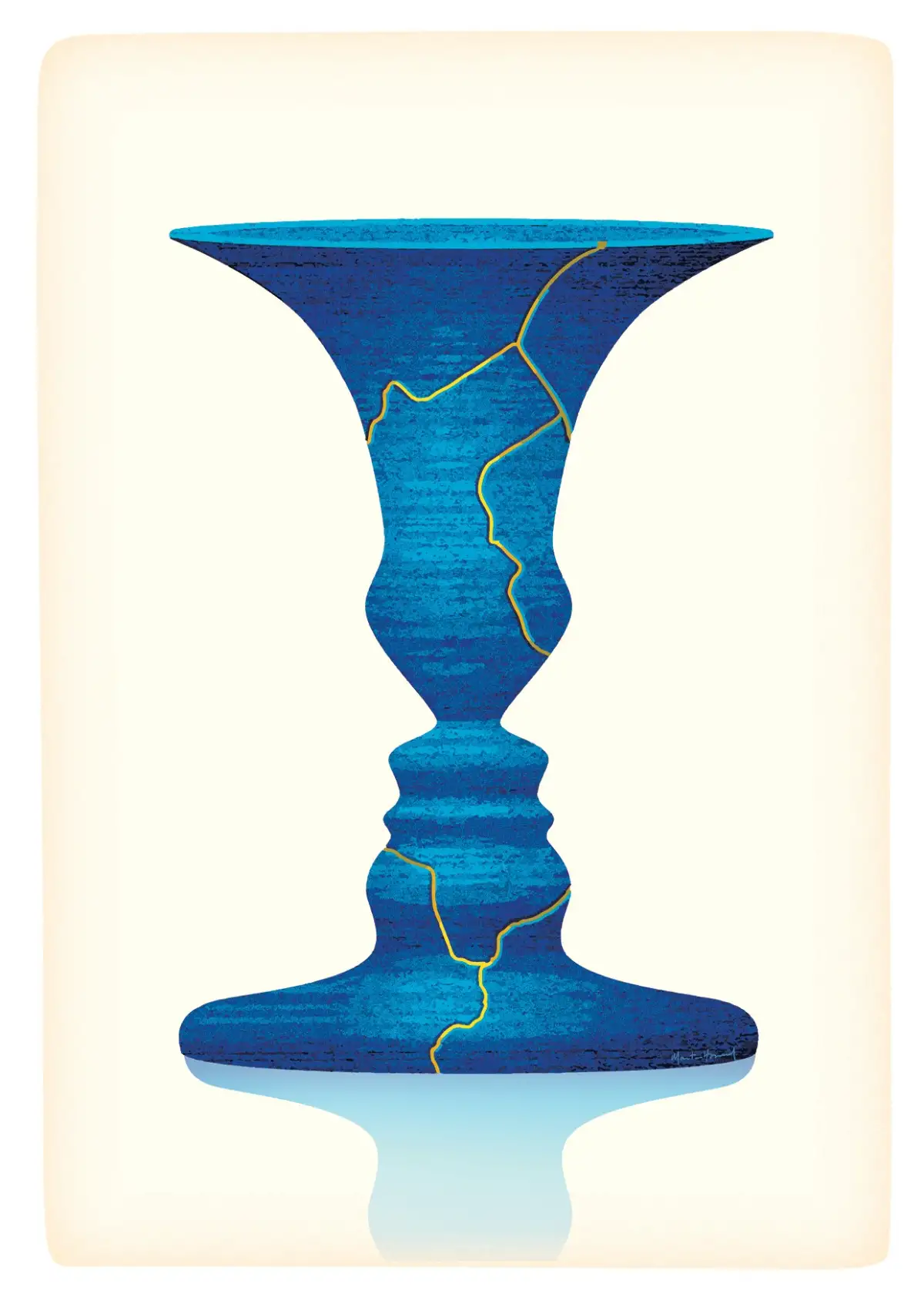
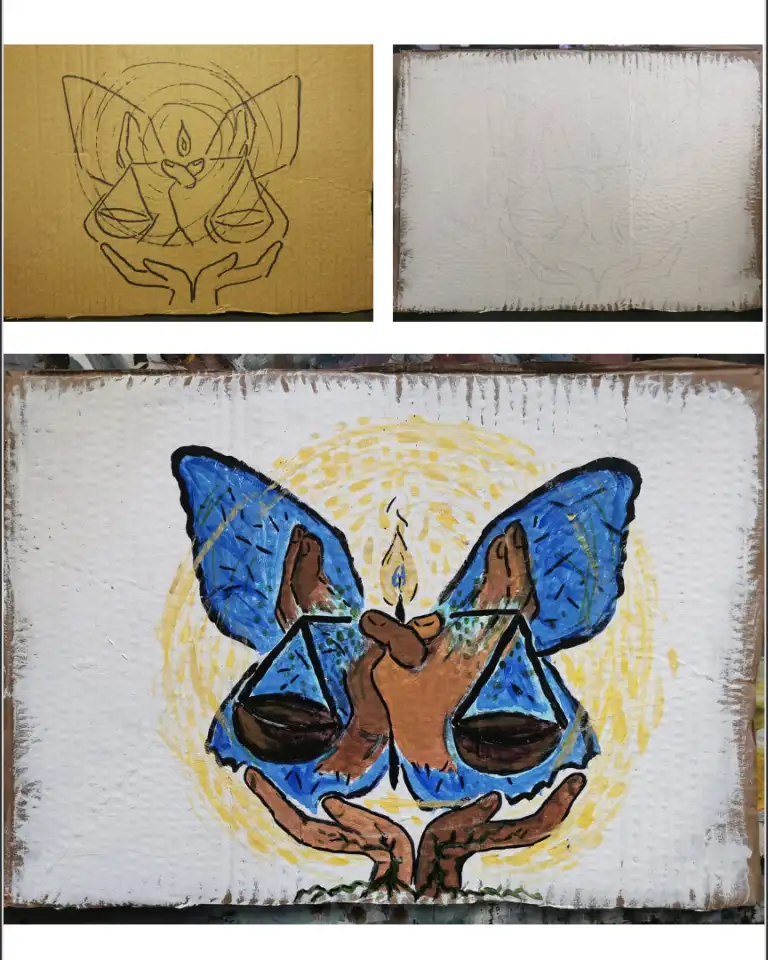
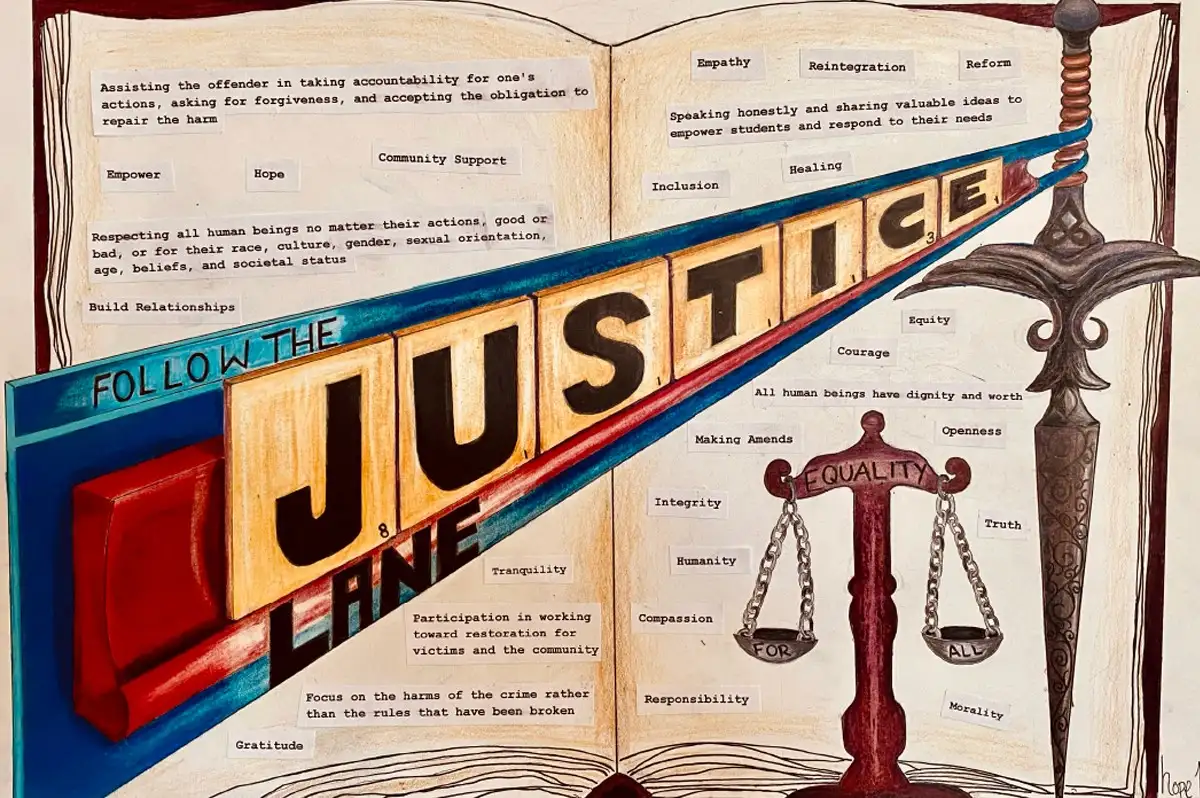

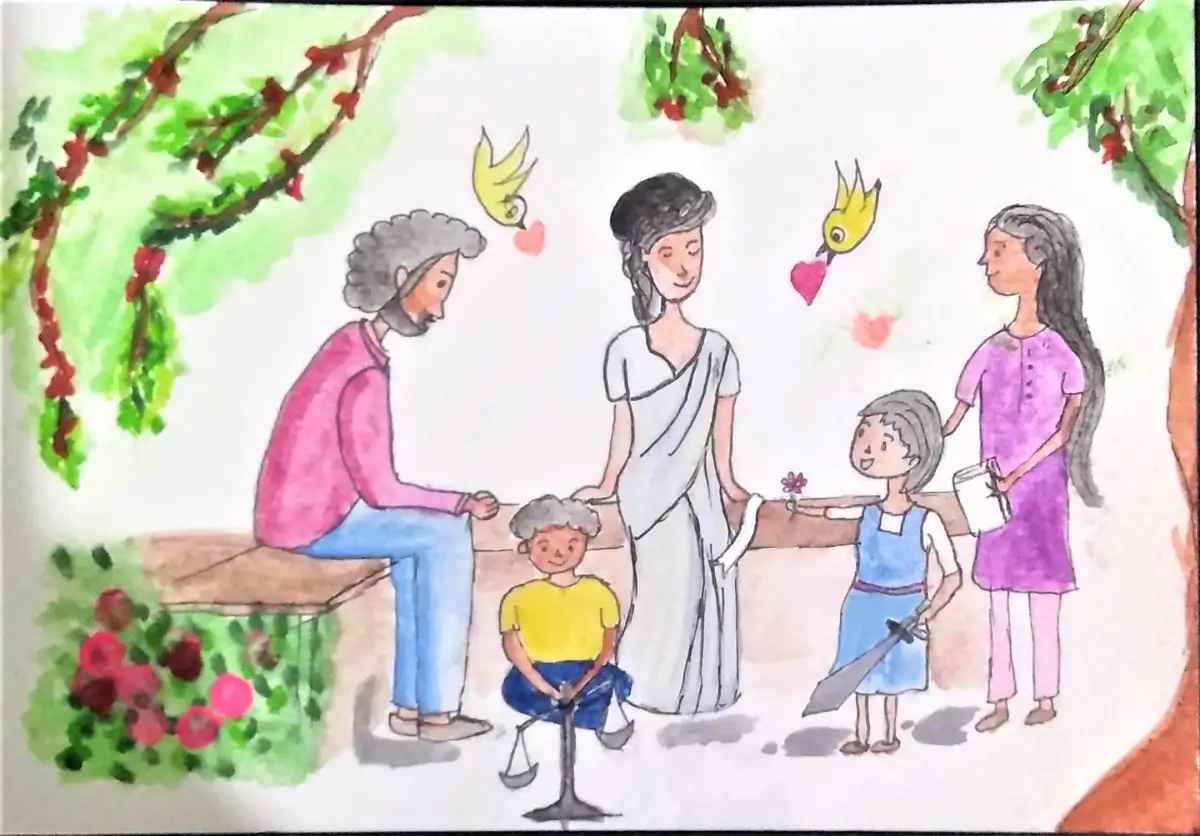
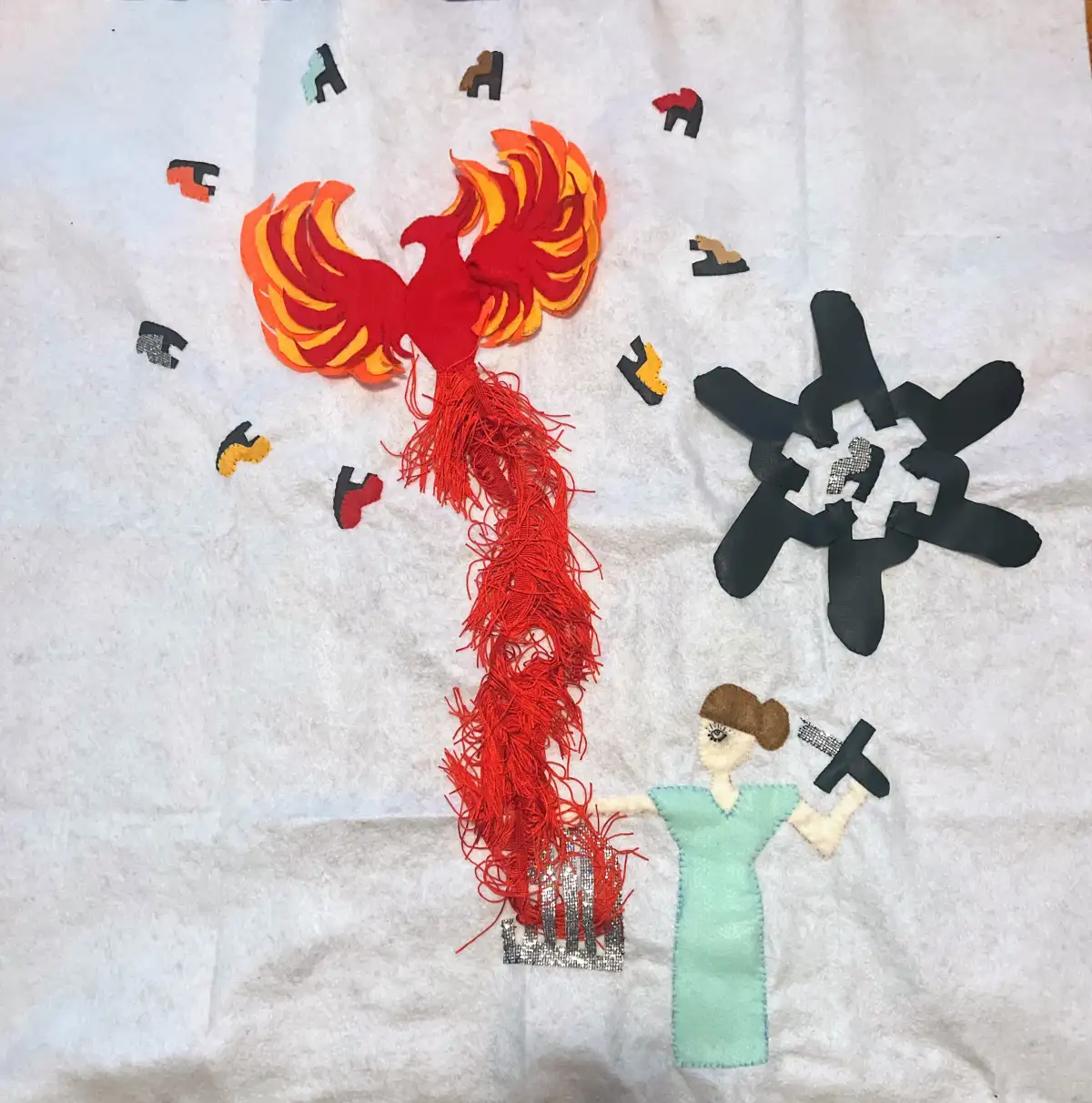
Taking the time to create a visual representation of restorative justice is a powerful way to deepen learning. Felix Rosado provides helpful instructions for engaging in a process of justice image-making in groups in Justice from the Inside Up (2024, p. 3–4). No image alone can tell the full story of restorative justice, but each is a part of a broader strategy to offer more expansive views of what justice can be. Each image helps to build a new narrative and to share the restorative paradigm with others in ways that add emotional and symbolic depth to verbal explanations. Eventually, perhaps these restorative images will be what flood our minds when we hear the word justice, replacing the images of gavels, handcuffs, and prison bars.
A critical advancement to the centrality of art in the restorative justice movement has come through the European Forum for Restorative Justice’s (EFRJ) annual REstART event (Biffi, 2022). After building interest in the intersection of art and restorative justice over several years, including hosting smaller related events, the EFRJ presented the first restorative justice arts festival (REstART) in 2020. REstART brought together artists of all types with restorative justice advocates and practitioners to explore the power and potential of integrating art more fully into the restorative justice movement. Following the success of the 2020 festival, EFRJ has continued to host a smaller REstART event annually. As program coordinator Emanuela Biffi explains, “On 8 December of every year, to celebrate its anniversary, we offer the EFRJ community the gift to be inspired and encouraged by the creativity and originality of artists working in the field of restorative justice. One thing is sure: the REstART restorative justice art movement has just begun” (2022, p. 476).
STORYTELLING AS A NARRATIVE CHANGE STRATEGY
Cultural narratives are built on the stories we tell and engage with, so it is rational and strategic to look to the art of storytelling in narrative change efforts for the greater adoption of restorative justice. Many restorative justice advocates see the logic of this approach. Often, you will hear restorative justice educators, trainers, or practitioners bring in the story of a real case they were involved in or aware of as a way to explain and illustrate the power of restorative justice. I have personally drawn on this strategy quite a bit. When I first started working in the restorative justice field as a case coordinator and later as a program manager, I kept a collection of anonymized case studies, written accounts of cases I had facilitated.1 I shared these case studies with family members, friends, and others in hopes that they would see through these real-life accounts the power and potential of restorative justice. Similarly, many news stories on restorative justice will incorporate the story of a real restorative justice case, telling the story of the impact the process had for the participants
There is no doubt that sharing real restorative justice stories or case studies has an important role to play in communicating restorative justice and advocating for its expansion. However, fictional accounts of restorative justice may contain a different and equally important power in bringing people into an understanding of restorative justice. A person reading fiction may have a stronger emotional response to the story than when reading a nonfiction story (Goldstein, 2009). Because fiction isn’t real, the reader is allowed a safe space to freely experience strong emotions without immediately transferring those emotions to real life or feeling obligations tied to those emotions. This allows readers to very strongly sympathize with fictional characters. This “distancing factor” allows for feelings of personal safety and control while engaging with the emotions of the fictional work (Menninghaus et al., 2017).
Temporarily suspending disbelief when we are reading fiction allows us to fully feel the emotions of the story and build investment in the outcome of the story, without the overly analytical or skeptical parts of ourselves getting in the way. This paves the way for empathy. As Claudia Hammond explains,
Of course, you could argue that fiction isn’t alone in this. We can empathize with people we see in news stories too, and hopefully we often do. But fiction has at least three advantages. We have access to the character’s interior world in a way we normally do not with journalism, and we are more likely to willingly suspend disbelief without questioning the veracity of what people are saying. Finally, novels allow us to do something that is hard to do in our own lives, which is to view a character’s life over many years. (2019)
Fiction helps us to develop empathy and compassion, furthering our moral development (Nussbaum, 1990). Fiction also helps to avoid the risk of psychic numbing. We are likely to experience psychological numbing when confronted with stories about large groups of people or statistics (for example, the number of people experiencing homelessness in the United States). Interestingly, we are more likely to experience affect or strong emotion when given a story about a single, identifiable individual as opposed to when given statistics about an entire group of people (Slovic, 2007). Stories about one individual, even fictional accounts of a character, may exert a much larger influence on us and help us to keep engaged and experience empathy. This is especially the case when we experience “emotional transportation,” or the experience of being “lost in a story,” fully immersed in the experiences and emotions of the characters (Bal & Veltkamp, 2013).
Due to the advantages of fiction, it is imperative that we build the repertoire of fictional stories that centrally feature restorative justice and that we use those stories in our strategic communication and narrative change efforts. In the following section, I will highlight a few recent novels that feature restorative justice and offer stories that bolster greater narrative change endeavors. It takes stories like these, it takes fiction, to help us to see what can be real.
RESTORATIVE JUSTICE NARRATIVES IN FICTION AND CREATIVE NONFICTION
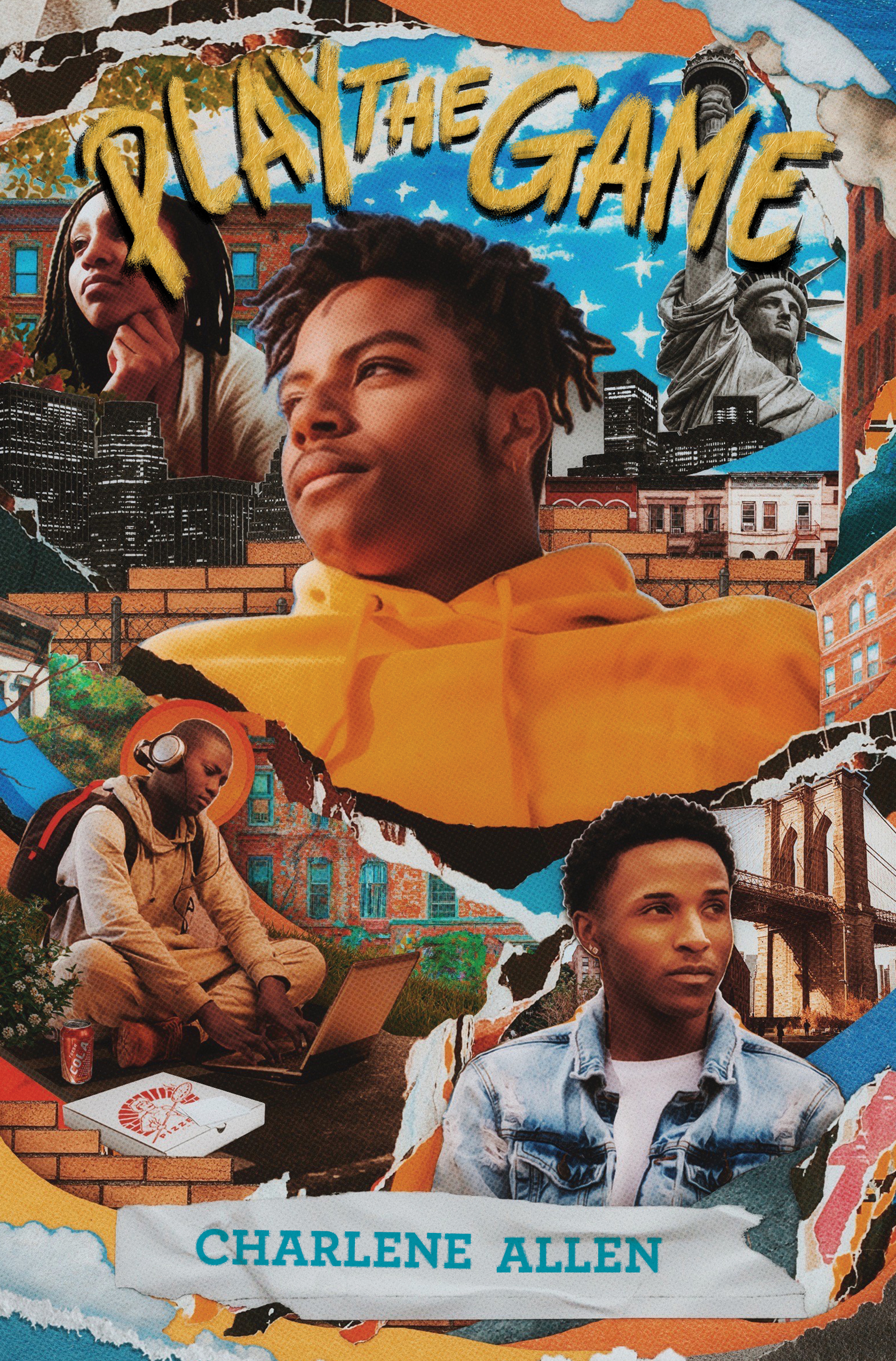
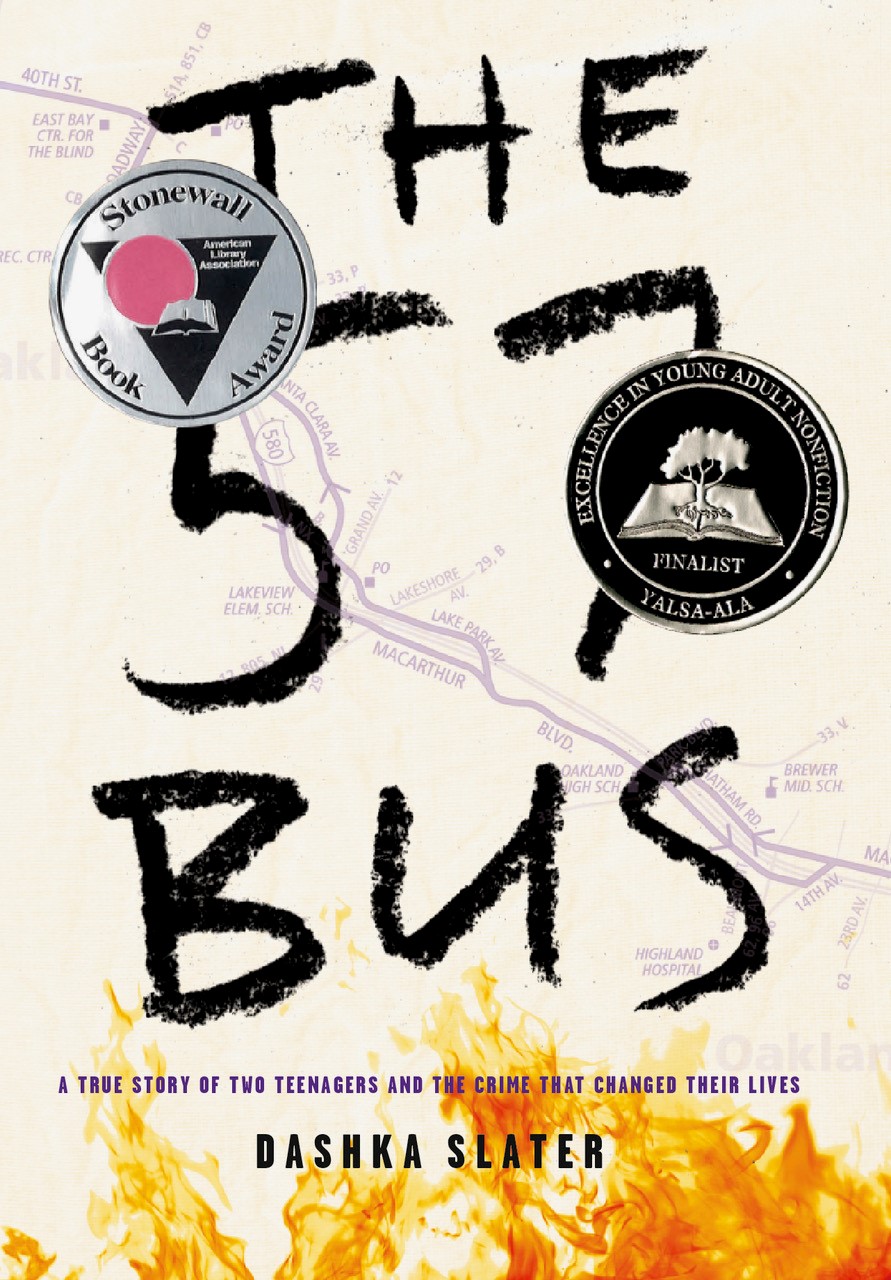
Slater explores the complexities of race, class, gender identity, and the juvenile justice system, offering a nuanced look at both Sasha’s recovery and Richard’s remorse and legal battle. Slater engages directly with the question of what justice ought to look like in the aftermath of the harm and includes direct quotes from restorative justice practitioners and advocates in the Oakland area. Slater highlights how restorative justice could offer an alternative to harsh sentencing by promoting dialogue between the harmed person (Sasha) and the person responsible (Richard). While Richard ultimately does not go through a restorative justice process, the book explores how such an approach could provide a more meaningful resolution that focuses on promoting healing and understanding rather than solely punishment. The 57 Bus encourages readers to think critically about the criminal justice system, the way that harmful behaviors are so often rooted in broader systemic harms, and how alternative approaches like restorative justice can lead to healing and personal growth.
While The 57 Bus is nonfiction, it allows a similar experience to a fictional work, inviting the reader into a deep exploration of the emotions and experiences of the characters over many years. It gives the reader a visceral experience of the failures of our conventional criminal legal system for both the person harmed and the person who caused the harm, showing the ripples of harm caused by the response after the event as well as the needs, for both parties, for a supportive and healing dialogue.
Wayward Creatures by Dayna Lorentz follows 12-year-old Gabe, who feels invisible at home and struggles to fit in at school. In a misguided attempt to impress his friends, he sets off illegal fireworks in the forest, unintentionally starting a wildfire that causes serious damage. Gabe participates in a restorative justice program, takes responsibility for his actions, and makes amends. Meanwhile, a young coyote named Rill is also struggling to survive after being separated from his pack due to the fire. The story is told in the alternating perspectives of Gabe and Rill, allowing for the development of empathy: for Gabe in understanding the deeper needs behind his damaging behavior and for the environment and Rill in offering the perspective of the animals. The book also provides a thorough, systematic account of how a common model for diversion restorative justice programs functions and what the dialogue process is like, answering questions that people unfamiliar with the model would likely have. Through Gabe’s story, the reader sees step-by-step how the process can work in a youth diversion context.
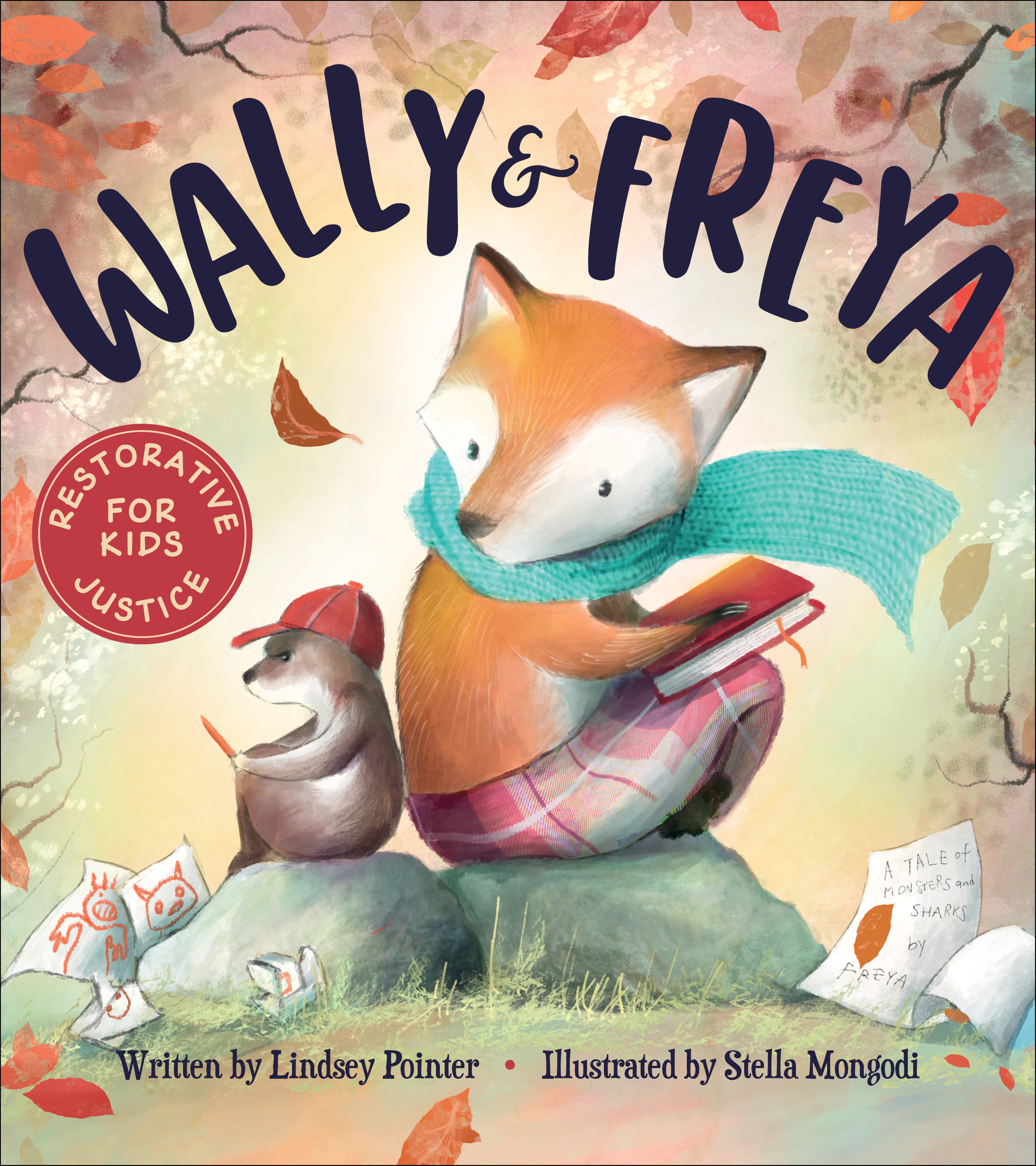
In Wally and Freya, I wanted to illustrate how compassionate curiosity can shift the way we see another person. I also wanted to show how someone could make things right in a creative, strengths-based way that didn’t cause further harm. The book aims to show the power of restorative approaches to young children and the adults (parents and teachers) who read to them, drawing them into a restorative way of seeing wrongdoing and kids who exhibit harmful behaviors.
RESTORATIVE JUSTICE NARRATIVES IN OTHER ARTISTIC MEDIUMS
In this piece, I chose to focus on developments in symbolic images and fiction and creative nonfiction, but there are many more forms of art that are similarly advancing the restorative justice paradigm. Theater has long been a central artistic space for the advancement of restorative justice. The EFRJ hosted the play The Conversation, which was later made into a film, and shows a restorative encounter (Biffi, 2022). Gilbert Salazar has drawn extensively on theater and improv exercises in his restorative justice education and training efforts. He also wrote the play (and later film) Sippin’, which centers around a conversation over tea between four women of color and explores the impacts of white fragility on restorative justice spaces (2020). Poetry has also been used to creatively communicate restorative justice. In the NCORJ Reimagining Justice Gallery, there are several poems that creatively describe the restorative approach and its power. Julio Evans-Cevallos’s Lady Justice: Two Ways to Serve is a video recording of his powerful spoken word poem. Evans-Cevallos starts with a description of the actions of a punitive Lady Justice. Then, with the words “But wait. What if...” he begins to describe the actions of a restorative Lady Justice, inviting the listener into an imagination of a hopeful and healing concept of justice (2024). Ping Showalter’s Questions for the Circle is a short but evocative poem structured around three core restorative questions: What happened? Who is affected? And what should be done? (2021). Film is another medium that has been used very effectively to describe restorative justice or even show the process. Films about restorative justice include Mass, Circles, Another Justice, A Once and Future Peace, How to Love Your Enemy, and many more (Talay, 2022; Metzgar, 2021; Free the People, 2020).
CONCLUSION
As Howard Zehr has observed, the intersection between justice and the arts is “one of the most promising frontiers in the restorative justice field” (2014, p. 95). Restorative justice has shown its promise and potential. A central challenge we face now is simply how to effectively communicate restorative justice to more people so that they understand what it is, see the benefits, and are inspired to support greater implementation. Intentional narrative change, in part through the creation of new stories and symbolic images, must be central to this endeavor.
Each of these creative efforts to re-story what justice means and how justice is achieved is an important part of a wider effort toward narrative change. This is essential work. If we want to build a new world, we need artists out ahead, drawing up the blueprints.
ACKNOWLEDGMENTS
It was an honor to be asked to write this paper for the IIRP Presidential Paper Series and a joy to write it! As we approach the October 2025 IIRP World Conference on the theme of Artful Integration, I feel excited and hopeful about the continued energy and growth we are seeing at the intersection of restorative justice and art. I would like to express deep gratitude to Margaret Murray, the IIRP’s Editorial Director. Your careful attention, feedback, and enthusiasm were so encouraging and strengthened the paper in so many ways. After encountering your excellent writing through your novel, it was a pleasure to get to learn from you as an editor. I would also like to thank the peer reviewers, Professors Melanie Green and Katie Owens-Murphy, as well as the external editor, Lauren Bailey, for your helpful suggestions and reflections. My own interest in the possibilities of art to advance restorative justice was first sparked by Brunilda Pali. Brunilda, thank you for being a visionary in the restorative justice field and for your friendship and collaboration. I have been continually energized and inspired by the European Forum for Restorative Justice’s REstART events. Thank you, in particular, to Emanuela Biffi, for your leadership and vision in the creative endeavors of EFRJ. My own creative spark in the restorative justice field is fed by many collaborations with Kathleen McGoey. Thank you, Kathleen, for all our time playing and creating together! It has been a joy over the last couple years to collaborate with Charlene Allen and Dayna Lorentz, two fellow authors with books that center around restorative justice. These collaborations have been energizing and inspiring and informed many of the thoughts in this paper. Cymone Fuller and Caitlin Morneau, two outstanding leaders in the restorative justice field, inspired me to begin thinking about the use of art and literature to communicate restorative justice in terms of narrative change strategies. I have the privilege of working every day with the creative and driven members of the National Center on Restorative Justice team who keep me motivated and excited to continue the work, even when it is difficult. Alanna Ojibway, Avery Arrington, DeMointé Wesley, Bobby Sand, Abby Crocker, David Karp, Justine Andreu Darling, Katie Wilson, Monique Appel, Karla Broady, Camila Alduenda Esquer, and Julia Batanghari, you are all amazing and I am so grateful to get to work with you! Finally, thank you to my amazing partner and kids for supporting me and for all the play and creativity you bring into every day.
REFERENCES
Aldington, C. (2022). A language of convergence: The co-created handmade thing as a ‘conversation starter’ within restorative justice processes. The International Journal of Restorative Justice, 5(3), 338–368. https://www.boomportaal.nl/doi/10.5553/TIJRJ.000138
Allen, C. (2023). Play the game. HarperCollins.
Bal, P. M., & Veltkamp, M. (2013). How does fiction reading influence empathy? An experimental investigation on the role of emotional transportation. PLoS One, 8(1), Article E55341. https://journals.plos.org/plosone/article?id=10.1371/journal.pone.0055341
Biffi, E. (2022). REstART – The restorative justice art movement. The International Journal of Restorative Justice, 5(3), 471–477. https://www.boomportaal.nl/doi/10.5553/TIJRJ.000136
de Mézerville López, C. (2020). Transformation. National Center on Restorative Justice. https://ncorj.org/art/claire-de-mezerville-lopez-transformation
Duncombe, S. (2016). Does it work? The æffect of activist art. Social Research: An International Quarterly, 83(1), 115–134. https://doi.org/10.1353/sor.2016.0005
Evan-Cevallos, J. (2024). Lady Justice: Two ways to serve. National Center on Restorative Justice. https://ncorj.org/art/julio-evans-cevallos-lady-justice-two-ways-to-serve
Frank, L. B., & Falzone, P. (2021). Introduction: Entertainment-education behind the scenes. In L. B. Frank & P. Falzone (Eds.) Entertainment-education behind the scenes: Case studies for theory and practice. Palgrave Macmillan. https://doi.org/10.1007/978-3-030-63614-2_1
Free the People. (2020, June 11). How to love your enemy: A restorative justice story [Video]. YouTube. https://www.youtube.com/watch?v=N2zDQ4S4n7I
Fuller, C., Morneau, C. & Rozzell, L. (July 29-August 1, 2024). Say this, not that! Effectively communicating about restorative justice with different audiences [Conference session]. National Association of Community and Restorative Justice Conference, Washington, D.C., United States.
Gibbs, P. (2024). How to communicate restorative justice effectively-20241121_140127-Meeting Recording.mp4 [Video].
Goldbard, A. (2013). The culture of possibility: Art, artists & the future. Waterlight Press.
Goldstein, T. R. (2009). The pleasure of unadulterated sadness: Experiencing sorrow in fiction, nonfiction, and “in person.” Psychology of Aesthetics, Creativity, and the Arts, 3(4), 232–237. https://doi.org/10.1037/a0015343
Hall, S. (1982). The Rediscovery of “Ideology”: Return of the Repressed in Media Studies. In M. Gurevitch, T. Bennett, J. Curran, & J Wollacott (Eds.), Culture, society and the media (pp. 56–90). Routledge.
Hamerslough, H. (2020). Justice lane. National Center on Restorative Justice. https://ncorj.org/art/hope-hamerslough-justice-lane
Hammond, C. (2019, June 2). Does reading fiction make us better people? BBC. https://www.bbc.com/future/article/20190523-does-reading-fiction-make-us-better-people
Howard, M. (2020). Healing Encounter. National Center on Restorative Justice. https://ncorj.org/art/martin-howard-healing-encounter
Lorentz, D. (2021). Wayward creatures. Clarion Books.
Leavy, P. (2011). Essentials of transdisciplinary research: Using problem-centered methodologies. Left Coast Press.
Lederach, J. P. (2005). The moral imagination: The art and soul of building peace. Oxford University Press.
Menninghaus, W., Wagner, V., Hanich, J., Wassiliwizky, E., Jacobsen, T., & Koelsch, S. (2017). The distancing-embracing model of the enjoyment of negative emotions in art reception. Behavioral and Brain Sciences, 40, Article e347. https://doi.org/10.1017/s0140525x17000309
Metzgar, E. D. (Director). (2021). A once and future peace [Video]. Solutions Media LLC.
Mohan, A., & Patel, D. (2020). Lady Restorative. National Center on Restorative Justice. https://ncorj.org/art/deborah-patel-arti-mohan-lady-restorative
Morris, J. (2022). Our stories are bigger than our cases: Digital storytelling in a restorative conferencing programme. The International Journal of Restorative Justice, 5(3), 369–391. https://www.boomportaal.nl/doi/10.5553/TIJRJ.000139
Murray, M. (2013). Forging justice: A restorative justice mystery. The Piper’s Press.
Narrative Initiative. (2024). What is narrative? https://www.narrativeinitiative.org/what-is-narrative
National Center on Restorative Justice. (n.d.). Reimagining justice: A restorative justice art gallery. https://ncorj.org/art
National Center on Restorative Justice. (2024, June 1). Webinar: Restorative justice storytelling [Video]. YouTube. https://www.youtube.com/watch?v=6-UUe2MdM8M
Nussbaum, M. (1990). Love’s knowledge: Essays on philosophy and literature. Oxford University Press.
Ojibway, A. Embracing justice. National Center on Restorative Justice. https://ncorj.org/art/alanna-ojibway-embracing-justice
Pali, B. (2017). Images of alternative justice: The alternative of restorative justice. In H. N. Pontel (Ed.). Oxford research encyclopedia of criminology. Oxford University Press. https://oxfordre.com/criminology/display/10.1093/acrefore/9780190264079.001.0001/acrefore-9780190264079-e-133
Pointer, L. (2018). If a picture is worth a thousand words, how can we illustrate restorative justice? https://lindseypointer.com/2018/09/19/if-a-picture-is-worth-a-thousand-words-how-can-we-illustrate-restorative-justice
Pointer, L. (in press). Affective methods for restorative justice research and communication. In K. B. Rasmussen, F. F. Rosenblatt, B. Pali, & E. Zinsstag (Eds.), Handbook on methods in restorative justice research. Brill.
Pointer, L., & Pali, B. (2022). Advancing restorative justice through art. The International Journal of Restorative Justice, 5(3), 315–322. https://www.boomportaal.nl/doi/10.5553/TIJRJ.000129
Pointer, L. & Mongodi, S. (2022). Wally & Freya. Good Books.
Rosado, F. (2024). Justice from the inside up: a restorative justice education facilitator’s manual. Living Justice Press.
Salazar, G. (2020). Passing the cup of vulnerability: Offering vulnerability as a challenge to white fragility through the elements of circle. In E. Valandra (Ed.), Colorizing restorative justice: Voicing our realities. (pp. 173–192). Living Justice Press.
Showalter, P. (2021). Questions for the circle. National Center on Restorative Justice. https://ncorj.org/art/ping-showalter-questions-for-the-circle
Slater, D. (2017). The 57 Bus. Farrar, Strauss and Giroux.
Slovic, P. (2007). “If I look at the mass I will never act”: Psychic numbing and genocide. Judgment and Decision Making, 2(2), 79–95. https://doi.org/10.1017/S1930297500000061
Smith, T. (2023). Building narrative power. Medium. https://medium.com/@liberationventures/building-narrative-power-d650c3e045e
Talay, M. (2022). Mass, circles and another justice: Three films about restorative justice. The International Journal of Restorative Justice, 5(3), 502–505. https://www.boomportaal.nl/doi/10.5553/TIJRJ.000132
Taylor, V. (2024). Justice restored. National Center on Restorative Justice. https://ncorj.org/art/verily-taylor-justice-restored
Transform Justice. (2021). Resolving crimes without going to court: A messaging guide. https://www.transformjustice.org.uk/wp-content/uploads/2023/02/Resolving-crimes-without-going-to-court-a-messaging-guide.pdf
Varona Martinez, G. (2022). Dancing the legal prohibition of restorative justice in intimate partner violence against women: Flamenco beats as encounters. The International Journal of Restorative Justice, 5(3), 323–337. https://www.boomportaal.nl/doi/10.5553/TIJRJ.000137
Zehr, H. (2014). The art of justice: a reply to Brunilda Pali. Restorative Justice, 2(1), 95–102.
NOTES
- These case studies can be viewed at https://lindseypointer.com/case-studies/.