Gina Baral Abrams, Dr.P.H., Ed.M., LSW, MCHES®
Abstract: The field of community health aims to improve the social determinants of health which can reduce health disparities and enhance health equity.
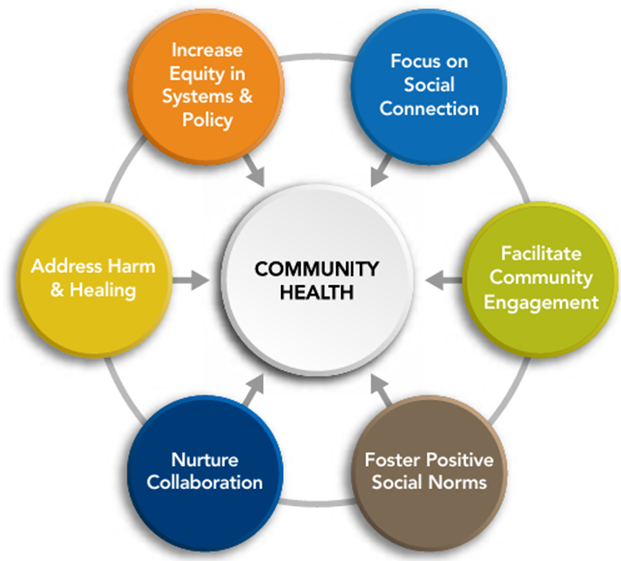
Models such as the social-ecological model are commonly used by community health professionals to show the interplay of social and other factors as supporting or inhibiting a community’s health. In this paper, the evolution of the community health field is traced, leading up to the recent U.S. Surgeon General’s report, Our Epidemic of Loneliness and Isolation. The author suggests that, in addition to the work that has been done to identify key factors and dynamics, it is necessary to focus explicitly on how we strengthen relationships and community. Integrating principles from the social-ecological model, a new model is presented to describe how restorative practices can be used to advance community health goals by focusing on social connection, facilitating community engagement, fostering positive social norms, nurturing collaboration, addressing harm and healing, and increasing equity in systems and policy. Implications for future research and practice are discussed.
Abrams, G. B. (2023, Summer). A restorative practices strategy to advance community health. IIRP Presidential Paper Series, 8, 1-24.
ABSTRACT
The field of community health aims to improve the social determinants of health which can reduce health disparities and enhance health equity. Models such as the social-ecological model are commonly used by community health professionals to show the interplay of social and other factors as supporting or inhibiting a community’s health. In this paper, the evolution of the community health field is traced, leading up to the recent US Surgeon General’s report, Our Epidemic of Loneliness and Isolation. The author suggests that, in addition to the work that has been done to identify key factors and dynamics, it is necessary to focus explicitly on how we strengthen relationships and community. Integrating principles from the social-ecological model, a new model is presented to describe how restorative practices can be used to advance community health goals by focusing on social connection, facilitating community engagement, fostering positive social norms, nurturing collaboration, addressing harm and healing, and increasing equity in systems and policy. Implications for future research and practice are discussed.
INTRODUCTION
We are living through a time when communities are regularly ruptured by politics, racialized violence, economic inequity, gender inequality, and social justice issues in addition to major public health crises like opioid addiction and the COVID-19 pandemic. Our communities should be inclusive and supportive environments where all members can enjoy a healthy life in its many aspects: physical and mental health, opportunities to learn and grow, safety from harm, and respect for individuality combined with a communal spirit. Creative and innovative solutions are required to address the many challenges within our communities and build better, healthier places for us to live.
In this paper, I suggest that community health can be supported by using restorative practices to reduce health disparities and promote health equity. To date, the relational tactics that operationalize community health strategies often arise from implicit, rather than explicit, intentional frameworks; positive gains in community development and outcomes are often unsustained. Restorative practices can provide specific processes to build relationship and community that have been identified and honed over decades of use, providing consistent and sustainable methods to achieve community health goals. But ultimately and equally importantly, a healthy community offers preventative strength by structuring the conditions that recognize individuals and support their growth and development, creating a strong community person by person, and also helping to identify and address issues before they become harmful. This paper describes the basic components of a healthy community, informed by others’ work in public health, psychology, and sociology. It also demonstrates how restorative practices is not only compatible with the goals of healthy communities but explicitly how restorative practices can be used to help create, maintain, and, when necessary, restore communities so they function at a high level to support the health of their members.
COMMUNITY
The definition of community varies depending on who is asked. The World Health Organization (WHO) defines community as “a specific group of people, often living in a defined geographical area, who share a common culture, values, and norms are arranged in a social structure according to relationships which the community has developed over a period of time. Members of a community gain their personal and social identity by sharing common beliefs, values, and norms which have evolved over time by the community in the past and may be modified in the future. They exhibit some awareness of their identity as a group and share common needs and a commitment to meeting them” (Nutbeam, 1986, p. 5).
Factors related to community have been identified as a feeling of belonging and interpersonal relatedness; a feeling that one matters (has “influence”); fulfillment of needs; and shared emotional connection (McMillan & Chavis, 1986). This is known as a sense of community. Others have noted that communities are not always homogenous entities and that people exist in multiple communities that are often nested within each other (Chavis & Lee, 2015). For example, you might live in a town where you share a common racial heritage but have different religious and political affiliations than most of your neighbors. While community members may share common interests, backgrounds, or purposes that give them a sense of cohesion, they are often made up of individuals and groups with diverse cultures, histories, social structures, value systems, and lived experiences.
Just as a community is not a monolith, it is also more than a sum of its parts. Although a community cannot be well if its members are not well, community health is a concept distinct from and greater than individual health. It is defined both objectively (i.e., how well the community meets the needs of all members) and subjectively (i.e., perception that the overall quality of life is good and just for all community members regardless of differences across individual identities) (Sung & Phillips, 2018).
ORIGINS OF COMMUNITY HEALTH
The origins of community health as an area of focus can be claimed by a number of health disciplines such as medicine or nursing, but my understanding of and work in community health originates in a public health perspective. The concept of public health has existed globally for centuries, focusing initially on physical health, as the social patterns of disease were recognized and efforts to address issues such as clean water, waste disposal, and diseases such as malaria, leprosy, and the plague were implemented. This was followed with an emphasis on identifying and responding to the spread of acute infectious diseases through sanitation measures, the development of effective vaccines, and mass immunization. This period (late 1800s to mid-1900s) has been called the “first public health revolution” and significantly extended life expectancy in the US (Public Health Service, 1979, p. vii).
The limited view of health as the absence of disease or infirmity was challenged in 1946 when the World Health Organization invited us to view health more broadly (and from a strengths-based perspective) as “a state of complete physical, mental, and social well-being” (Grad, 2002, p. 984). At the same time, the WHO affirmed that “the enjoyment of the highest attainable standard of health is one of the fundamental rights of every human being without distinction of race, religion, political belief, economic or social condition” (Grad, 2002, p. 984). In 1979, the US Surgeon General’s report called for a “second public health revolution” to address major chronic diseases, such as heart disease, cancer, and stroke, by promoting specific behaviors (Public Health Service, 1979, p. vii). In the 1990s and early 2000s, greater examination of the economic and social conditions that influence health revealed significant disparities across groups and reoriented modern-day community health work to achieve health equity.
The work of community health professionals, according to the Centers for Disease Control and Prevention (CDC), “promotes healthy living, helps prevent chronic diseases and brings the greatest health benefits to the greatest number of people in need. It also helps to reduce health gaps caused by differences in race and ethnicity, location, social status, income, and other factors that can affect health” (National Center for Chronic Disease Prevention and Health Promotion, 2017, para. 1). Community health professionals seek to understand the unique characteristics and histories of people in communities, described in their own terms. This allows us to honor the concept of intersectionality—and people’s overlapping identities and experiences. Through this lens, we can learn to appreciate the complexity of sociocultural influences and, for community health purposes, to incorporate this new knowledge into how we approach and do our work.
There is no one universally accepted definition of community health, but as a public health professional, the one I like best comes from a 2014 Preventive Medicine article by Goodman and colleagues. They define community health as:
A multi-sector and multi-disciplinary collaborative enterprise that uses public health science, evidence-based strategies, and other approaches to engage and work with communities, in a culturally appropriate manner, to optimize the health and quality of life of all persons who live, work, or are otherwise active in a defined community or communities. (Goodman et al., 2014, p. 5)
I favor this definition because it is not prescriptive. Rather, it implies a set of values and processes to build capacity—knowledge, skills, commitment, partnerships, structures, systems, and leadership—to create health-promoting communities. This also invites communities to define their own needs and identify and act on the specific factors that impact their health.
SOCIAL-ECOLOGICAL MODEL
The social-ecological model extends our understanding of the complicated dynamics of human behavior by describing the many interrelated and interdependent levels of influence that can shape people’s health. Based on Urie Bronfenbrenner’s seminal work on ecological systems theory (1977), McLeroy and colleagues’ social-ecological model describes the reciprocal relationship between an individual and the social contextual factors that influence health behavior—it “assumes that appropriate changes in the social environment will produce changes in individuals and that the support of individuals in a population is essential for implementing environmental changes” (McLeroy et al., 1988, p. 1).
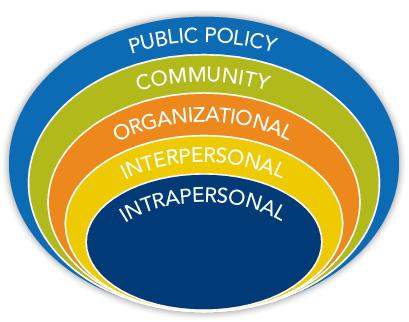
The social-ecological model presents five levels of influence—intrapersonal, interpersonal, organizational, community, and public policy factors—that are nested within each other (Figure 1).
- INTRAPERSONAL: Individual characteristics that influence behavior, such as knowledge, attitudes, beliefs, and personality traits.
- INTERPERSONAL: Interpersonal processes in primary groups including family, friends, and peers that provide social identity, support, and role definition.
- ORGANIZATIONAL: Rules, regulations, policies, and informal structures that may constrain or promote recommended behaviors.
- COMMUNITY: Social networks and norms (standards) that exist formally or informally among individuals, groups, and organizations.
- PUBLIC POLICY: Local, state, and federal policies and laws that regulate or support healthy actions and practices.
SOCIAL DETERMINANTS OF HEALTH
Human life expectancy is a key measurement used in public health to monitor the overall health of a population. A recent study published in the American Journal of Public Health shows that life expectancy in the US has been dropping since 1955, a longer period of time than was previously thought to be the case, to a level now far below other economically developed countries (Woolf, 2023). The study’s authors go on to state that life expectancy is heavily influenced by systemic factors that are larger and more powerful than individual health choices in supporting a long, quality human life.
These factors, called the social determinants of health, refer to “the non-medical factors that influence health outcomes. They are the conditions in which people are born, grow, work, live, and age, and the wider set of forces and systems shaping the conditions of daily life” (World Health Organization, 2023, para. 1). However, these factors should not be viewed as unalterable. Recently, critics have suggested a change in language for this model because it is important to acknowledge that human beings can possess a high capacity for change, despite incredible obstacles. Clearly, not everyone facing the same set of negative social factors will experience the same outcomes.
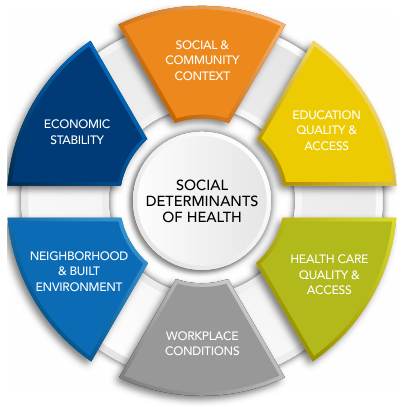
- SOCIAL AND COMMUNITY CONTEXT: Personal relationships, social support, discrimination, civic participation, and incarceration.
- EDUCATION QUALITY & ACCESS: Early childhood development, secondary education, higher education, language skills, and literacy.
- HEALTHCARE QUALITY & ACCESS: Primary healthcare, health literacy, and health insurance.
- WORKPLACE CONDITIONS: Employment security, worker/workplace safety, access to health insurance, paid vacation, environmental risks and hazards, work/life balance, voice in workplace decisions, and opportunity to learn new skills and advance.
- NEIGHBORHOOD AND BUILT ENVIRONMENT: Place of birth, housing, environmental quality, transportation, crime and violence, and access to quality food and water.
- ECONOMIC STABILITY: Employment, income, housing stability, and food security.
HEALTH EQUITY
The six domains of the social determinants of health illustrate that good community health outcomes cannot be achieved without ensuring all community members have access to an equitable lived experience. Without this equity, disadvantaged communities experience disproportionalities in health conditions such as diabetes, hypertension, obesity, asthma, heart disease, cancer, preterm birth, and chronic stress (Office of Health Equity, 2022). Most recently, the disproportionate impact of COVID-19 on predominantly Black/African American communities has highlighted the imperative to reduce health disparities.
The history of many forms of structural injustice in the United States and worldwide are inextricably linked with enduring disparities in the conditions of daily life. However, these conditions are malleable and disparities are preventable. Improving the social determinants of health can help promote health equity, meaning that everyone has a fair and just opportunity to be as healthy as possible (Braveman et al., 2018). Stated differently, “Health equity means social justice in health (i.e., no one is denied the possibility to be healthy for belonging to a group that has historically been economically/socially disadvantaged)” (Braveman, 2014, p. 7). A bill before the US Congress, the Improving Social Determinants of Health Act of 2021 H.R. 379, illustrates the recognition of health equity as an issue worthy of legislative action (Improving Social Determinants of Health Act, 2021).
With health disparities in mind, critics of the social determinants of health model recently recommended integrating other drivers of health that more directly address power relations and influence, including both political and commercial determinants (Freudenberg, 2023). The political determinants of health comprise the systematic process of structuring relationships, distributing resources, and administering power, which mutually reinforce or influence one another to shape opportunities that either advance health equity or exacerbate health inequities (Dawes, 2020). These conditions “create the social drivers—including poor environmental conditions, inadequate transportation, unsafe neighborhoods, and lack of healthy food options—that affect all other dynamics of health” (Satcher Health Leadership Institute, 2023, para. 3). The commercial determinants of health refer to private sector activities that influence the physical and social environments, the availability of potential solutions, and our discourse and understanding around key health and social issues (Maani et al., 2022). For example, when zoning regulations fail to reserve or protect some land for community purposes, such as parks and recreation areas, those spaces may quickly disappear as they are purchased for real estate development. These criticisms stress the considerable power of politics and commerce to dominate decisions that affect community health and the little input communities may have in these decisions. Taken together, the social, political, and commercial determinants of health make evident that social systems and structures shape the context in which communities strive to support people’s health.
In a nutshell, community health aims to improve the social determinants of health, which would reduce health disparities and promote health equity. It requires attending to the social connections, partnerships, normative behavior, systems, and policies in the community. As the chronology of the field’s development shows, a great deal of work has been done—and will continue to be done—to identify the key factors and dynamics of community health. I suggest that we now need to focus explicitly on how we strengthen relationships and community to achieve community health goals.
RESTORATIVE PRACTICES
Restorative practices can supply processes to build a foundation that can help a community to grow in its understanding of itself and what it needs to be healthy. As a field within the social sciences, restorative practices studies how to strengthen relationships between individuals as well as social connections within communities (International Institute for Restorative Practices, 2023). The discipline is built on a foundation of principles and processes that support engagement, encourage dialogue, address conflict, and repair harm. Building relationships and social connections allow issues to be addressed when they occur and, by doing so, also prevent negative situations from growing into larger problems (Wachtel, 2016). Restorative practices has been used in educational settings, organizations, the criminal justice system, and family counseling.
Restorative practices includes principles and processes such as circles, expressing and sharing emotion, and participatory learning and action. All restorative processes support the goal of working with each other, rather than doing things to or for each other (McCold & Wachtel, 2003). We believe that this makes human beings happier, healthier, and more productive, and more likely to make positive changes in their own behavior and in their communities. Underlying each restorative process is the goal of building relationships and community.
Of particular importance to community health, restorative practices can also be a prevention-oriented approach that addresses the social determinants of health (Davis, 2019). Consider circles, for example. Circles provide “spaces that structure dialogue in a way that humanizes people, allows us to become better known to each other, and increase our connections with each other” (Kligman, 2023, p. 26). They also help to establish positive norms of how we interact with each other. In a restorative community, circles are the structure used for most meetings. Meetings have check-in and check-out prompts to which everyone responds and follow a one-speaker-at-a-time protocol, which places value on individual voices and listening. A check-in prompt might be personal (“What was the highlight of your weekend?”), which helps us to see each other as individuals with families, hobbies, and preferences and to recognize shared interests or frustrations (“I hate Monday mornings.”). A circle to discuss a specific problem might use more serious prompts (“What do you hope we can achieve at this meeting?”; “What did you hear that surprised you?”). Regular use of prompts also allows for the expression of emotion—from simple likes and dislikes to acknowledging anxiety, fear, or anger (“I’m worried we might have to let staff go if we can’t fix this problem”). Regular expressions of common emotions can lead to greater comfort with the expression of emotion generally, a phenomenon that is not always welcome in other contexts.
Free expression and sharing of emotion support inclusion, voice, authenticity, vulnerability, courage, and agency. Through active listening, recipients learn to engage with compassion and empathy. This dynamic increases positive affect, which has been associated with good health outcomes by activating the neuroendocrine, autonomic, and immune systems (Dockray & Steptoe, 2010). When shared, positive affect fosters social connection, thus strengthening community. Strong social connections allow individuals to increase their sensitivity to each other, including bridging differences of culture and upbringing, as well as learning to navigate relationships. How people freely express emotion should feel natural and right for them, but structured interactions are also available. For example, affective statements can be used to approach someone with an issue (“When you don’t comment on my input, I feel you don’t value my contribution.”). The courage required, in addition to the invitation to speak directly to each other about behavior that negatively impacts someone, comes only after participants have experience with basic relationship building.
Participatory learning and action (PLA) are essential processes in a restorative environment. PLA is a form of group reflection and learning meant to engage community members, support inclusiveness and equity, and provide the greatest breadth of ideas and solutions. The PLA approach is one of the many methods in the fields of research (e.g., participatory action research, community-based participatory research) and education (e.g., dialogic methods of teaching, professional learning groups/professional learning communities) (Freire, 2018; Torre, 2014; Collins et al., 2018; Myers & Myers, 1995). For example, professional learning groups (PLGs) serve as the bedrock of many of the courses at the IIRP Graduate School; this pedagogical approach builds communities of students who contribute to each other’s learning process. Sheety and Rundell (2012) found that PLGs can be especially valuable as a way to stimulate creative problem-solving. Learners share a problem or issue, and peers offer feedback; this process allows learners to expand their own thinking and combine the different perspectives to form their own solution. PLA has also been used in the world of business as an approach to encourage participatory decision-making. Drawing from business research, the IIRP Graduate School also enlists the activity of Fair Process (Kim & Mauborgne, 1997) to ensure engagement, explanation, and expectation clarity when making decisions that impact all employees, such as when revising our institutional mission. Pertinent to this paper, PLA processes are growing in application within the field of community health, as they have been shown to improve social and health outcomes in a variety of health-related settings (Allaham et al., 2022).
FOCUS ON SOCIAL CONNECTION
The emphasis on the power of social factors to impact health outcomes cannot be overstated. For example, a meta-analysis found that the influence of weak social relationships on the risk of death are comparable with well-established risk factors for mortality such as smoking and alcohol consumption and exceed the influence of other risk factors such as physical inactivity and obesity (Holt-Lunstad et al., 2010). Lacking social connection has been shown to have the same effect on mortality as smoking 15 cigarettes a day (Holt-Lunstad et al., 2017). In May 2023, the US Surgeon General released Our Epidemic of Loneliness and Isolation, a report that pointed out not just the need to recognize social connection as a health issue but to highlight it as a current crisis with multiple negative ramifications. For individuals, these include physical and mental health consequences, reduced socio-economic mobility, and low civic engagement. For communities, these include weakened institutions, dysfunctional government, and the financial cost of addressing large-scale issues (e.g., violence, addiction) that might have been prevented or at least ameliorated if stronger social connections had been in place. Social connection is one of the factors that the field of community health recognizes as necessary for a healthy life, with models such as the social-ecological model and the social determinants of health reflecting its importance. But the Surgeon General’s report raises the significance of social connection to an urgent status. The report spells out that community health can help by promoting individual best practices and advancing community solutions (Office of the US Surgeon General, 2023). Restorative practices can support both endeavors.
Restorative practices recognizes the need of all humans for social connection and offers a growing set of principles and processes that develop interpersonal skills and competencies to help build strong relationships. These processes emphasize building self-awareness, encouraging individuals to recognize their strengths and weaknesses and also to see what qualities and characteristics others value about them. The goal is for every person to know themselves better and recognize areas for improvement, essentially to embrace a growth mindset (Dweck, 2006). These processes also develop the interpersonal skills required to connect with others, such as listening, asking questions instead of making assumptions, expressing empathy, freely expressing emotion, acting with authenticity, taking accountability when mistakes are made, and managing conflict.
Equally as important, if not more, is the perspective we must bring to our relationships. How we “show up” with others matters—that is, the way we choose to interact, be present with others, ask questions, listen, and make decisions. For example, at the International Institute for Restorative Practices Graduate School, we demonstrate our commitment to a relational culture by living the norm of “people before tasks” (Kligman, 2021, p. 14). Our focus is not always work-related. For example, all our meetings begin with a check-in prompt that allows us to get to know each other better and build social connection. A prompt that encourages free expression of emotion such as “When was the last time you tried something new, how did it go, and how did you feel about it?” allows us to learn more about each other and to let ourselves be seen more fully by others. Recognizing that conflict is inevitable in relationships, we manage it in a healthy manner and solve problems together. We don’t always get it right, but because we value relationships, we use the skills we’ve learned to build and maintain social connection to recover from our stumbles.
Restorative practices offers an important prevention approach to improve the social determinants in a community because building relationships and social connection is a protective factor in and of itself, and it allows issues to be addressed when they occur, preventing negative situations from growing into larger problems. Looking back at the social-ecological model, restorative practices, and the competencies it can provide, supports the critical interpersonal core, and has the potential to change the dynamic of communities, so they are self-defined, involved, inclusive, safer, and healthier places.
FACILITATE COMMUNITY ENGAGEMENT
A distinctive feature of community health is community engagement, which reorients the way practitioners view community members. Rather than “targets” for intervention to be managed by experts, community members have voices, ideas, skills, and leadership that are invited, respected, and nurtured as assets to build upon. Mathie and colleagues (2017) describe this as a “permanent commitment to a shift in subject position—from done to, to doer” (p. 3). This shift in perspective is significant for all parties involved—from professionals who may have adopted a savior mentality that prevents them from seeing the strengths and resources that communities possess to community members who have chosen not to be actively engaged in addressing their concerns and building their community. In short, we must regard community members “as subjects to be honored, rather than as objects of need or as objects to be managed” (Vaandering, 2013).
Community engagement is well aligned with the foundational restorative principle of doing things with others rather than to or for them. For example, circles are the common meeting format for all kinds of events in restorative practices. Emphasizing inclusion, flexibility to accommodate numbers, and equity (no “head of table”), they can support everything from Monday morning check-ins to policy meetings to regular team-building exercises. Over time, community members become more courageous to speak freely and participate.
Community engagement emphasizes longer-term community assets and capacity-building rather than being solely problem-driven (Glanz et al., 2015). Restorative practices focuses on listening, understanding community history, starting “where the people are,” participatory learning and action, dialogue, shared power, collaboration, equitable involvement, and co-creation. With regular use, people will adopt these as normative practices, which will, in turn, strengthen a sense of community. This is important because we know that people with greater sense of community are more likely to act in healthy ways and work with others to promote health for all (Wallerstein et al., 2015).
Of particular importance, the use of restorative practices makes space for those community members who may not previously have had a “seat at the table” when decisions are made. Fine and Torre (2021) caution that “it is not enough to ‘invite’ ‘diverse’ people [to the table]…processes must be engaged so everyone’s gifts and lines of vision are visible and animated, and all forms of privilege (e.g., academic, White, highly educated) are checked” (p. 6-7). Circles, for example, function so that participants get the opportunity and support to speak without interruption or objection. When there is a history of top-down power structures and community dysfunction, the structure of circles alone cannot ensure that everyone present will feel comfortable or safe enough to do so. Combined with the new normative practices previously mentioned, their full value will emerge over time by creating a climate of trust, which is the essence of a restorative community.
FOSTER POSITIVE SOCIAL NORMS
The social-ecological model highlights that a person’s health is influenced by the social norms and standards that exist either formally or informally within the community. Norms are informal rules and expectations guiding behavior in cultures, groups, and societies (Bicchieri et al., 2018). Positive social norms in a community could include fair-minded behavior, honesty, and large-scale cooperation (Aycinena et al., 2022). For example, people in a town might act on a local norm to provide support for an ill or injured neighbor by providing food, caring for children, or pooling labor. This example also depicts prosocial behavior, or behavior with the intent to benefit others, including cooperation, help, and comfort (Brief & Motowidlo, 1986). Research shows that prosocial behavior can improve individuals’ happiness (Curry et al., 2018), bring meaning to their lives (Klein, 2015), and relieve depression and anxiety (Miles et al., 2021).
Creating shared social norms does not require people in a community to be homogeneous. Ideally our communities would be inclusive and supportive environments that combine respect for individuality and a sense of community. Choi and colleagues’ research (2018) suggests that communities will function most creatively to solve their own problems when members embrace their own individual identity and when they value the community as a collective. Individual identities and needs of all in a community must be honored while working to normalize a relational culture in which members contribute to the community’s social development for mutual benefit. Importantly, mutual benefit should not be understood as a transactional approach to relationships in communities. To the contrary, relationships with the purpose of authentic social connection humanize each person and can lead to greater social change. For example, at the IIRP Graduate School we share the norm to communicate with free expression of emotion—minimizing the negative, maximizing the positive, but allowing people to say what is really on their minds (Bailie, 2018).
By supporting diverse voices, self-definition, and involvement, restorative practices can create a relational culture that is fertile soil for community health. For example, community summits, a form of participatory action, can encourage listening and dialogue to overcome people existing in their own echo chambers. Community members are invited to name the norms, behaviors, and practices that are consciously or unconsciously valued in the community—good or bad. Then, they can work toward a shared vision for the optimal health of the community and identify new norms to help facilitate that vision. Further, if we continue to engage the community in an ongoing and iterative process of listening and dialogue, it can help to build critical consciousness that honors the perspectives of multiple identities within the community (Wallerstein et al., 2015).
Community leaders have a particular responsibility in developing and modeling a prosocial culture. Restorative practices can prompt them to be intentional in this effort. Restorative practices challenges the “power paradox” by which people become less empathetic and less engaging as they accumulate power (Keltner, 2016). In a restorative culture, people in power must still be empathetic, lead with transparency and humility, empower others, foster collaboration, and invite the engagement, voice, and influence of all community members.
NURTURE COLLABORATION
Groups or sectors exist in every community, often with entrenched views that lead to conflict or stalemate when trying to address important issues. Although existing models describe and define the elements of successful collaboration (e.g., create a shared vision; share data and information; decide on, implement, and oversee a pathway to action), they typically lack methods for how to overcome initial resistance, manage ongoing relationships, and make decisions inclusively and fairly.
Having functioned in silos, collaborators seeking to create health-promoting communities often have had different historical experiences, present diverse philosophies and priorities, and are resistant to yielding position or power. Although we may get collaborators to come to the table, we cannot assume they will work well together, especially as they begin to recognize the difficult work that is needed to bring the change they seek. Called “an essential elixir for public life and neighborly relations” (Rainie et al., 2019, p. 3), trust is the most commonly cited determinant of collaborative effectiveness (de Montigny et al., 2019). Restorative practices offers an explicit approach for how to develop trust by supporting a psychologically safe environment where candor is expected and collaborators feel they can take risks without the fear of retribution (Edmondson, 1999). Psychological safety increases the likelihood that people will engage and share their ideas, thereby organically generating information, ideas, and possible solutions that are better suited to a specific community than externally derived, pre-packaged programs and solutions (Kligman, 2021). Regular check-in circles and team-building exercises can help people get to know each other’s history, life circumstances, and challenges and better appreciate their shared values and goals. With growing familiarity, people more often feel comfortable taking risks together and learn to value collaborative problem-solving (Kligman, 2021).
Specific restorative processes also include the regular use and expectation of feedback to let people know how their behavior impacts others, using affective statements to structure feedback and acknowledging and addressing conflict when it occurs. Feedback is best given and received when relationships engender reciprocity and trust; feedback is hollow and potentially harmful without those things.
Each group will have its own dynamics and challenges. From the outset, these practices can help to clarify all collaborators’ roles and responsibilities and create shared norms for how they will relate to each other. Normalizing free expression of emotion and using affective language, two hallmarks of restorative practices, can support authenticity and deepen relationships for even greater risk-taking. Circles can be used to safely exchange ideas and encourage diversity of perspectives. Participatory decision-making strategies can be used to make decisions fairly by engaging everyone involved, explaining the reasoning behind each decision and making sure that everyone clearly understands the decision and what is expected of them once a decision has been made (Kim & Mauborgne, 1997).
ADDRESS HARM AND HEALING
Working in a community will typically involve parties who have experienced varying degrees of past harm, and some may suffer harm due to conflict that arises as the work progresses. Restorative practices can provide specific strategies for responding when this is the case. Specifically, the restorative questions (i.e., What happened? What were you thinking at the time? What have you thought about since? Who has been impacted and how? What needs to happen to make things right?) can help to structure conversation among those involved in an incident (O’Connell, 2009). In more serious situations, a formal conference can be organized where those involved are prepared to meet and be guided by a trained facilitator to discuss what happened.
The focus on healing all parties involved in a harmful event is noteworthy. Harms that reach the level of crimes are addressed by the justice system but involve only the main players and have little or no focus on healing. Restorative justice has worked to address this issue with an emphasis on the needs of those who have been harmed. It is important to remember, however, that people experience varying levels of harm every day, which, unfortunately, is unacknowledged and unaddressed (Weingarten, 2003). Using restorative practices is important in these cases, too, since otherwise, these recurrent harms will continue to erode people’s trust in other people and the community as a whole.
Most recently, listening circles have been used to address community harms such as violence and the sexual abuse of children by religious leaders (Oakley, 2020) by helping people process what has occurred. By giving people space to express their thoughts and feelings about the event, they can begin to explore their collective experience together. The hallmarks of effective listening circles are storytelling, expressions of empathy, and shared emotional connections. They are neither discussions nor debates and are not intended to facilitate problem-solving but instead are focused on helping participants process what has happened.
Practitioners of restorative practices have noted that when working to build relationships and strengthen communities, issues can arise related to past harms or traumas. Currently, there is no established protocol for identifying people’s needs and connecting them to the supports they require; facilitators respond as best they can, given their own backgrounds and knowledge of available resources. Developing this much-needed protocol requires a close working relationship between restorative practitioners and community health leaders.
From a community perspective, it is important not only to respond to current incidents of harm but also to prevent future harm from happening (Mingus, 2019). Even more central to the healing process is uncovering and addressing past harms that persist in the present environment. Otherwise, acts of restoration may be short-lived. Further, it is important to remember that not everyone may wish to restore the community to the conditions in place before the harm occurred. For marginalized and oppressed groups, especially, restoration may be seen as “going backward” to recreate the conditions that preceded the incident that might even replicate the moments of harm as opposed to creating a healthier instance. Thus, to achieve equitable and lasting change, community health and restorative practitioners alike must appreciate that it is incredibly challenging, if not impossible, for a community to fully heal in the presence of ongoing harm. More importantly, a commitment to centering health equity requires us to think more deeply about harm and healing and be more purposeful in how we engage communities to drive their own healing processes.
Pinderhughes et al. (2015) describe community trauma as “the product of the cumulative and synergistic impact of regular incidents of interpersonal, historical, and intergenerational violence and the continual exposure to structural violence” (p. 22). In her book We Do This ‘Til We Free Us: Abolitionist Organizing and Transforming Justice, Mariame Kaba states that a system that never addresses the why behind a harm will never actually reduce the harm itself (2021). Failure to do so “can result in both high levels of trauma across the population and a breakdown of social networks, social relationships and positive social norms across the community—all of which could otherwise be protective against health outcomes” (Pinderhughes et al., 2015, p. 3). Restorative practices can help to structure a community’s efforts to uncover the underlying causes of its members’ trauma and uphold its commitment to healing through transformational social change. For example, Archbishop Desmond Tutu used restorative processes in his role as chair of the Truth and Reconciliation Commission in post-Apartheid South Africa to allow victims and perpetrators to face one another in a peaceful manner, truthfully share their experiences of the past, and have their concerns validated (Allais, 2011).
INCREASE EQUITY IN SYSTEMS AND POLICY
The social-ecological model indicates that it is important to address the systems in a community that influence the social determinants of health. Kaba affirms this need, reminding us that “what happens in our interpersonal relationships is mirrored and reinforced by the larger systems… [if] you end up too focused on the interpersonal, you cannot transform the conditions that led to the interpersonal harm and violence” (2021, p. 148). Restorative practices can be used to identify root causes of the dynamics and conditions that inhibit good health in a community and to structure community processes and policies that are inclusive, just, and equitable. Stated differently, using restorative practices can help bring about social justice, which has been defined as the “fair treatment and equitable status of all individuals and social groups within a society” as well as the “social, political, and economic institutions, laws, or policies that collectively afford such fairness and equity” (Duignan, 2023, para. 1).
Restorative practices can support social justice and transformational social change by making critical connections and fostering grassroots movements that seek fairness, equity, inclusion, self-determination, or other goals for currently or historically oppressed, exploited, or marginalized populations (Duignan, 2023). For example, participatory learning groups can provide a space and a structure for people to align around a shared goal, develop leadership within movements and collective influence by promoting self-awareness and co-learning, and identify ways to challenge power structures to create change (Wallerstein et al., 2015). Restorative practices can also generate widespread support for social movements by supporting inclusion, emphasizing shared power, underscoring the strength of diversity, and encouraging full participation of their members.
When examining successful movements, Rochon and Mazmanian (1993) found that gaining access to the policy process is the most effective path for movement organizations to have an impact on intended outcomes. They learned that those in power are often more willing to offer inclusion in the process than they are to accept movement demands outright. While demands and advocacy are necessary to be heard, continuing long-term involvement offers opportunity to shape future policy. Accordingly, movement organizations can embrace the restorative principle of doing things with others, rather than to or for them, as a useful tactic in order to join the policy process and advocate for the community’s needs.
Restorative practices could also be used to facilitate the policy development process. Research shows that the more the community’s needs are considered in policy decision-making, the more effective these policies will be (National Academies of Sciences, Engineering, and Medicine, 2017). When developing policies to address the social determinants of community health, the first step is to identify the community’s most pressing problems (Centers for Disease Control and Prevention, Office of Policy, Performance, and Evaluation, 2019). The next step in policy development is to analyze policy options, select the best option, and develop a strategy for furthering the policy’s adoption (Centers for Disease Control and Prevention, Office of Policy, Performance, and Evaluation, 2021). Community engagement is also useful when analyzing a policy’s potential benefits and burdens, educating the people or organizations affected by the new policy, and clarifying what members of the community can do to increase the policy’s likelihood of achieving its intended objectives.
In addition to being a useful approach to influence any policy-making process, there are policies that support restorative practices in and of itself. For example, the state of Illinois codified the Community Mediation Program by which minors who commit delinquent acts may be dealt with in a speedy and informal manner at the community or neighborhood level (Juvenile Court Act, 1987/1999). Another example is the Netherlands Child and Youth Act (2014), which regulates how youth care should be addressed at the local level and supports the Family Group Conference (FGC) model. Strongly influenced by the Māori people of mainland New Zealand, FGC is a structured family-led decision-making and planning process during which the child, parents, and wider family group make their own plan for the child’s well-being before having a child protection intervention imposed (Frost et al., 2014). Such policies demonstrate the idea that community members are best situated to identify solutions to community problems. They are aided by various community professionals who can provide expertise to finalize an action plan and provide resources as needed.
SUMMARY
The Surgeon General’s recent report raised the alarm about the critical need to strengthen social connection across every level of society. I suggest that not only can restorative practices offer proven ways to help achieve this goal, but it can also help address other factors identified by the field of community health that are critical for creating the social conditions where individuals can flourish, and communities can thrive. In addition to focusing on social connection, the strategies discussed in this paper include facilitating community engagement, fostering positive social norms, nurturing collaboration, addressing harm and healing, and increasing equity in systems and policy.
Going forward, two questions must be considered. The first is how to begin. Current models offer some insight and ideas. For example, whole-school approaches in K–12 education that emphasize training all school staff to use restorative practices have been shown to improve school culture and climate and reduce student discipline disparities based on race and other personal characteristics (Acosta et al., 2016; Augustine et al., 2018). The second question is how to use restorative practices on a large enough scale to make a significant difference at all levels of the social-ecological model. Perhaps the closest model for the purposes of community health can be derived from the growing number of towns and cities that have embraced restorative practices to develop stronger neighborhoods, improve social services, and reform their justice systems. Currently, cities such as Detroit; Hull, Bristol, and Leeds in the U.K.; Leuven, Belgium; and Como, Lecco, and Tempio Pausania in Italy are all involved in various stages of incorporating restorative practices to structure and improve their communities (Chapman, 2022). Community health may offer a different dynamic when incorporating restorative practices, with its own challenges yet to be discovered. With its focus on building community first, no matter what the parameters or characteristics of the particular community may be, restorative practices offers a promising approach.
ACKNOWLEDGMENTS
In the spirit of self-reflexivity, I acknowledge my standpoint as an educated, White cisgendered woman who has experienced ableism and negative reactions to disability. I believe that communities are spaces of reciprocity and that humans have a responsibility to each other and the good of society. I approach my work in restorative practices with professional values from the fields of social work and public health and uphold the ethical principle of respect for the inherent dignity and worth of every person. I acknowledge that my positionality likely influenced this paper to a great extent.
I would like to thank Dr. Bill DeJong (Tufts University), Paula Swinford (University of Southern \ California), Dr. Ashley Toland (University of West Florida), and Dr. Linda Kligman, Dr. Kaleigh Mrowka, and Courtney Tobin from the IIRP Graduate School for their insightful and helpful feedback on earlier versions of this paper. I am indebted to Margaret Murray (IIRP Graduate School) for her intensive editing work and unwavering commitment to bringing this paper to fruition after long last.
I also wish to thank my daughter, Naomi, who inspires me every day. As she grows up, I hope she will act with integrity, embrace her personal power, and use her voice to shape a society in which she and all humans can flourish.
REFERENCES
Acosta, J. D., Chinman, M., Ebener, P., Phillips, A., Xenakis, L., & Malone, P. S. (2016). A cluster-randomized trial of restorative practices: An illustration to spur high-quality research and evaluation. Journal of Educational and Psychological Consultation, 26(4), 413–430. https://doi.org/10.1080/10474412.2016.1217488
Allaham, S., Kumar, A., Morriss, F., Lakhanpaul, M., Wilson, E., Sikorski, C., Martin, J., Costello, A., Manikam, L., & Heys, M. (2022). Participatory learning and action (PLA) to improve health outcomes in high-income settings: A systematic review protocol. BMJ Open, 12(2), Article e050784. https://doi.org/10.1136/bmjopen-2021-050784
Allais, L. (2011). Restorative justice, retributive justice, and the South African Truth and Reconciliation Commission. Philosophy & Public Affairs, 39(4), 331–363. http://www.jstor.org/stable/23261250
Augustine, C. H., Engberg, J., Grimm, G. E., Lee, E., Wang, E. L., Christianson, K., & Joseph, A. A. (2018). Can restorative practices improve school climate and curb suspensions? An evaluation of the impact of restorative practices in amid-sized urban school district (RR-2840-DOJ). RAND Corporation. https://doi.org/10.7249/RR2840
Aycinena, D., Rentschler, L., Beranek, B., & Schulz, J. F. (2022). Social norms and dishonesty across societies. Proceedings of the National Academy of Sciences of the United States of America, 119(31), Article e2120138119. https://doi.org/10.1073/pnas.2120138119
Bailie, J. (2018). Basic concepts shape our culture: A message from our president. Restorative Works, 2018, 1. https://www.iirp.edu/images/pdf/Restorative-Works-2018.pdf
Bicchieri, C., Muldoon, R., & Sontuoso, A. (2018, Winter). Social norms. Stanford Encyclopedia of Philosophy. https://plato.stanford.edu/entries/social-norms
Braveman, P. (2014). What are health disparities and health equity? We need to be clear. Public Health Reports, 129(1, Suppl. 2), 5–8. https://doi.org/10.1177/00333549141291S203
Braveman, P., Arkin, E., Orleans, T., Proctor, D., Acker, J., & Plough, A. (2018). What is health equity? Behavioral Science & Policy, 4(1), 1–14. http://doi.org/10.1353/bsp.2018.0000
Brief, A. P., & Motowidlo, S. J. (1986). Prosocial organizational behaviors. Academy of Management Review, 11(4), 710–725. https://doi.org/10.2307/258391
Bronfenbrenner, U. (1977). Toward an experimental ecology of human development. American Psychologist, 32(7), 513–531. https://psycnet.apa.org/doi/10.1037/0003-066X.32.7.513
Centers for Disease Control and Prevention, Office of Policy, Performance, and Evaluation. (2019, January 2). The CDC policy process.
Chapman, T. (2022). Restorative justice, an approach that contributes to the prevention and mitigation of polarization at the local and regional level (Concept paper). European Forum for Urban Security. https://efus.eu/wp-content/uploads/2022/02/Concept-paper-Tim-Chapman-Restorative-Justice-an-approach-that-contributes-to-the-prevention-and-mitigation-of-polarisation-at-the-local-and-regional-level.pdf
Chavis, D. M., & Lee, K. (2015). What is community anyway? Stanford Social Innovation Review. https://ssir.org/articles/entry/what_is_community_anyway#
[Child and Youth Act], wet van 1 maart 2014, Stb., 2015-140. https://zoek.officielebekendmakingen.nl/stb-2015-140.pdf
Choi, H., Cho, S., Seo, J., & Bechtoldt, M. N. (2018). The joint impact of collectivistic value orientation and independent self-representation on group creativity. Group Processes & Intergroup Relations, 21(1), 37–36.
Collins, S. E., Clifasefi, S. L., Stanton, J., The Leap Advisory Board, Straits, K. J. E., Gil-Kashiwabara, E., Rodriguez Espinosa, P., Nicasio, A. V., Andrasik, M. P., Hawes, S. M., Miller, K. A., Nelson, L. A., Orfaly, V. E., Duran, B. M., & Wallerstein, N. (2018). Community-based participatory research (CBPR): Towards equitable involvement of community in psychology research. American Psychologist, 73(7), 884–898. https://doi.org/10.1037/amp0000167
Curry, O. S., Rowland, L. A., Van Lissa, C. J., Zlotowitz, S., McAlaney, J., & Whitehouse, H. (2018). Happy to help? A systematic review and meta-analysis of the effects of performing acts of kindness on the well-being of the actor. Journal of Experimental Social Psychology, 76, 320–329. https://doi.org/10.1016/j.jesp.2018.02.014
Davis, F. (2019). The little book of race and restorative justice: Black lives, healing, and US social transformation. Good Books.
Dawes, D. E. (2020). The political determinants of health. Johns Hopkins University Press.
de Montigny, J. G., Desjardins, S., & Bouchard, L. (2019). The fundamentals of cross-sector collaboration for social change to promote population health. Global Health Promotion, 26(2), 41–50. https://doi.org/10.1177/1757975917714036
Dockray, S., & Steptoe, A. (2010). Positive affect and psychobiological processes. Neuroscience and Biobehavioral Reviews, 35(1), 69–75. https://doi.org/10.1016/j.neubiorev.2010.01.006
Duignan, B. (2023, January 13). Social justice. Encyclopedia Britannica. https://www.britannica.com/topic/social-justice
Dweck, C. (2006). Mindset: The new psychology of success. Random House.
Edmondson, A. (1999). Psychological safety and learning behavior in work teams. Administrative Science Quarterly, 44(2), 350–383. https://doi.org/10.2307/2666999
Fine, M., & Torre, M. E. (2021). Essentials of critical participatory action research. American Psychological Association.
Freire, P. (2018). Pedagogy of the oppressed: 50th anniversary edition (4th ed). Bloomsbury Academic.
Freudenberg, N. (2023). Integrating social, political and commercial determinants of health frameworks to advance public health in the twenty-first century. International Journal of Social Determinants of Health and Health Services, 53(1), 4–10. https://doi.org/10.1177/00207314221125151
Frost, N., Abram, F., & Burgess, H. (2014). Family group conferences: Context, process and ways forward. Child & Family Social Work, 19(4), 480–490. https://doi.org/10.1111/cfs.12047
Glanz, K., Rimer, B. K., & Viswanath K. (2015). Health behavior: Theory, research, and practice (5th ed). Jossey-Bass.
Goodman, R. A., Bunnell, R., & Posner, S. F. (2014). What is “community health”? Examining the meaning of an evolving field in public health. Preventive Medicine, 67, S58–S61. https://doi.org/10.1016/j.ypmed.2014.07.028
Grad, F. P. (2002). The preamble of the Constitution of the World Health Organization. Bulletin of the World Health Organization, 80(12), 981–984. https://apps.who.int/iris/handle/10665/268691
Holt-Lunstad, J., Smith, T. B., & Layton, J. B. (2010). Social relationships and mortality risk: A meta-analytic review. PLoS Medicine, 7(7), Article e1000316. https://doi.org/10.1371/journal.pmed.1000316
Holt-Lunstad, J., Robles, T. F., & Sbarra, D. A. (2017). Advancing social connection as a public health priority in the United States. American Psychologist, 72(6), 517–530. https://doi.org/10.1037/amp0000103
Improving Social Determinants of Health Act, H.R. 379, 117th Cong. (2021). https://www.congress.gov/bill/117th-congress/house-bill/379
International Institute for Restorative Practices. (2023). What is restorative practices? https://www.iirp.edu/restorative-practices/explained
Juvenile Court Act of 1987, Community mediation program, Ill. Stat. 705 § 405/5-310 (1997 & eff. 1999). https://www.ilga.gov/legislation/ilcs/ilcs3.asp?ChapterID=50&ActID=1863
Kaba, M. (2021). We do this ‘til we free us: Abolitionist organizing and transforming justice. Haymarket Books.
Keltner, D. (2016). The power paradox: How we gain and lose influence. Penguin Press.
Klein, N. (2015). Prosocial behavior increases perceptions of meaning in life. The Journal of Positive Psychology, 12(4), 354–361/ https://doi.org/10.1080/17439760.2016.1209541
Kim, W. & Mauborgne, R. (1997). Fair process: Managing in the knowledge economy. Harvard Business Review, 75(4), 65–75.
Kligman, L. (2021). Sparking creativity: Workplace applications of restorative practices. IIRP Presidential Paper Series, 3, 1–22. https://www.iirp.edu/images/pdf/IIRP_Sparking_Creativity.pdf
Kligman, L. (2023). Heart strong work: Improving workplace culture. IIRP Graduate School Publications.
Maani, N., Petticrew, M., & Galea, S. (2022). The commercial determinants of health. Oxford University Press.
Mathie, A., Cameron, J., & Gibson. K. (2017). Asset-based and citizen-led development: Using a diffracted power lens to analyze the possibilities and challenges. Progress in Development Studies, 17(1), 54–66. https://doi.org/10.1177/1464993416674302
McCold, P., & Wachtel, T. (2003). In pursuit of paradigm: A theory of restorative justice. Restorative Practices E-Forum. https://www.iirp.edu/images/pdf/paradigm.pdf
McLeroy, K. R., Bibeau, D., Steckler, A., & Glanz, K. (1988). An ecological perspective on health promotion programs. Health Education & Behavior, 15(4), 351–377. https://doi.org/10.1177%2F109019818801500401
McMillan, D. W., & Chavis, D. M. (1986). Sense of community: A definition and theory. Journal of Community Psychology, 14(1), 6–23. https://doi.org/10.1002/1520-6629(198601)14:1<6::AID-JCOP2290140103>3.0.CO;2-I
Miles, A., Andiappan, M., Upenieks, L., & Orfanidis, C. (2021). Using prosocial behavior to safeguard mental health and foster emotional well-being during the COVID-19 pandemic: A registered report protocol for a randomized trial. PLoS ONE 16(1), Article e0245865. https://doi.org/10.1371/journal.pone.0245865
Mingus, M. (2019, January 11). Transformative justice: A brief description. Transform Harm. https://transformharm.org/transformative-justice-a-brief-description
Myers, C. B., & Myers, L. K. (1995). The professional educator: A new introduction to teaching and schools. Wadsworth Publishing.
National Academies of Sciences, Engineering, and Medicine. (2017). Policies to support community solutions. In J. N. Weinstein, A. Geller, Y. Negussie, & A. Baciu (Eds.), Communities in action: Pathways to health equity (pp. 335–382). National Academies Press. https://doi.org/10.17226/24624
National Center for Chronic Disease Prevention and Health Promotion. (2017). NCCDPHP: Community health.
Nutbeam, D. (1986). The WHO health promotion glossary. Health Promotion, 1(1), 113–127. https://www.jstor.org/stable/45153790
Oakley, K. (2020, October 29). The power of listening circles. IIRP News. https://www.iirp.edu/news/the-power-of-listening-circles
O’Connell, T. (2009). The origins of restorative conferencing. Journal for Peace and Justice Studies, 18(1/2), 87–94. https://doi.org/10.5840/peacejustice2009181/27
Office of Health Equity. (2022). What is health equity? https://www.cdc.gov/sti/php/projects/health-equity.html
Office of the US Surgeon General. (2023). Our epidemic of loneliness and isolation: The US Surgeon General’s advisory on the healing effects of social connection and community. US Department of Health & Human Services. https://www.hhs.gov/sites/default/files/surgeon-general-social-connection-advisory.pdf
Pinderhughes, H., Davis, R., & Williams, M. (2015). Adverse community experiences and resilience: A framework for addressing and preventing community trauma. Prevention Institute. https://www.preventioninstitute.org/sites/default/files/publications/Adverse%20Community%20Experiences%20and%20Resilience.pdf
Public Health Service. (1979). Healthy people: The Surgeon General’s report on health promotion and disease prevention (DHEW-PHS-79-57701). US Department of Health, Education and Welfare. https://files.eric.ed.gov/fulltext/ED186357.pdf
Rainie, L., Keeter, S., & Perrin, A. (2019, July 19). Trust and distrust in America. Pew Research Center. https://www.pewresearch.org/politics/2019/07/22/trust-and-distrust-in-america
Rochon, T., & Mazmanian, D. (1993). Social movements and the policy process. Annals of the American Academy of Political and Social Science, 528, 75–87. http://www.jstor.org/stable/1047792
Satcher Health Leadership Institute. (2023). Political determinants of health. Morehouse School of Medicine. https://satcherinstitute.org/news/what-are-political-determinants-of-health-do-they-differ-from-sdoh
Sheety, A., & Rundell, F. (2012). A PLG (Professional Learning Group): How to stimulate learners’ engagement in problem-solving. US-China Education Review, 2(5), 497–503.
Sung, H., & Phillips, R. G. (2018). Indicators and community well-being: Exploring a relational framework. International Journal of Community Well-being, 1, 63–79. https://doi.org/10.1007/s42413-018-0006-0
Torre, M. E. (2014). Participatory action research. In T. Teo (Ed.), Encyclopedia of critical psychology. Springer.
US Department of Health and Human Services, Office of Disease Prevention and Health Promotion. (n.d.). Social determinants of health. Healthy People 2030. https://health.gov/healthypeople/objectives-and-data/social-determinants-health
Vaandering, D. (2013). A window on relationships: Reflecting critically on a current restorative justice theory, Restorative Justice, 1(3), 311–333. https://doi.org/10.5235/20504721.1.3.311
Wachtel, T. (2016). Defining restorative. International Institute for Restorative Practices. https://www.iirp.edu/images/2022/WachtelDefiningRestorative2016.pdf
Wallerstein, N., Minkler, M., Carter-Edwards, L., Avila, M., & Sanchez, V. (2015). Improving health through community engagement, community organization, and community building. In K. Glanz, B. K. Rimer, & K. Viswanath (Eds.). Health behavior: Theory, research, and practice (5th ed., pp. 277–300). Jossey-Bass.
Weingarten, K. (2003). Common shock: Witnessing violence every day: How we are harmed, how we can heal. Dutton/Penguin Books.
Woolf, S. H. (2023). Falling behind: The growing gap in life expectancy between the United States and other countries, 1933–2021. American Journal of Public Health, e1–e11. Advance online publication. https://ajph.aphapublications.org/doi/abs/10.2105/AJPH.2023.307310
World Health Organization. (2021). Health promotion glossary of terms 2021. https://www.who.int/publications/i/item/9789240038349
World Health Organization. (2023). Social determinants of health. https://www.who.int/health-topics/social-determinants-of-health#tab=tab_1