Kerry Clamp, Ph.D.
Abstract: Our policing institutions are in a state of crisis. This article argues that meaningful reform will require cultural transformation that places community and relationships at the core of frontline policing.
The integration of restorative practice—restorative principles and techniques—is presented as a better approach to reform than other solutions currently on offer. While fully acknowledging that restorative justice in policing is one of the most contested areas of application, this article asserts that objections are principally based on an overly restrictive view of police officers as facilitators. Much less attention has been given to how restorative practice can frame frontline policing to improve staff morale and increase positive police–community interactions. This article plugs that gap. Drawing on more than a decade of research, I propose foundational components of an explicit practice framework for restorative policing and outline the potential outcomes for frontline officers and the communities they serve.
Clamp, K. (2023, Fall). A restorative framework for transforming police practice. IIRP Presidential Paper Series, 9, 1-25.
ABSTRACT
Our policing institutions are in a state of crisis. This article argues that meaningful reform will require cultural transformation that places community and relationships at the core of frontline policing. The integration of restorative practice—restorative principles and techniques—is presented as a better approach to reform than other solutions currently on offer. While fully acknowledging that restorative justice in policing is one of the most contested areas of application, this article asserts that objections are principally based on an overly restrictive view of police officers as facilitators. Much less attention has been given to how restorative practice can frame frontline policing to improve staff morale and increase positive police–community interactions. This article plugs that gap. Drawing on more than a decade of research, I propose foundational components of an explicit practice framework for restorative policing and outline the potential outcomes for frontline officers and the communities they serve.
INTRODUCTION
Policing in the Anglophone world is in a state of crisis, particularly in relation to claims of endemic racism and sexism that lead to poor and, at times, illegal officer conduct (Chan, 1996; Loftus, 2009). In the last decade, the deaths of African Americans in the US at the hands of police have caused outrage and demands for reform, beginning with the murder of Trayvon Martin in 2012, from which the Black Lives Matter movement emerged in 2013. The subsequent murder of George Floyd, in 2020, sparked widespread protests and then calls for the “defunding” of the police. In England and Wales, 1,500 police officers were accused of violence against women and girls between October 2021 and March 2022 (Burns et al., 2023), and fatal police shootings and deaths in custody (disproportionately affecting aboriginal and First Nations people) have increased exponentially in Australia and Canada in the last decade (Crosby et al., 2023; Goldsworthy, 2021). This crisis has not only resulted in significant public outrage and reduced support for contemporary modes of policing (IOPC, 2022; Kelley, 2016) but also decreased the attractiveness of policing as a career for existing officers and potential new recruits (Wojslawowicz et al., 2023; Tyson & Charman, 2022).
There have been notable efforts to respond to calls for reform by redirecting funds from police budgets to support more preventative interagency collaboration. The public health approach to violence in Scotland, for example, has produced a reduction in the homicide rate by 50% and the number of hospital admissions due to assault with a sharp object by 62% (House of Commons, 2018). Funds have also been diverted to restorative justice (RJ) programs to better deal with the consequences of crime and its underlying causes. For example, in July 2020, the Berkeley City Council formally adopted the George Floyd Community Safety Act and made a commitment to “achieve a new and transformative model of positive, equitable, and community centered safety for Berkeley” (NICJR, 2021, p. 3). Within their implementation plan, the Council aspires to reduce the police budget by 50% and to reallocate this savings to fund other priorities, including RJ programs (NICJR, 2021).1
Efforts have also been made to identify new policing models and to improve police culture. In Longmont, Colorado, Public Safety Chief Mike Butler set about actively recruiting new officers who were willing “to take responsibility, do not need to be told what to do, and can talk and work with those outside the force” (Dzur & McKnight, 2022, p. 7). Beyond the US, the Australia Victorian Equal Opportunity and Human Rights Commission established an independent review into sex discrimination, sexual harassment, and predatory behavior in Victoria Police (VEOHRC, 2015). Following this review, a Restorative Engagement and Redress Scheme for Victoria Police employees was developed to demonstrate the agency’s commitment to the safety and well-being of its employees (Victorian Department of Justice, 2021).
RJ is recognized globally as “a process whereby parties with a stake in a specific offense collectively resolve how to deal with the aftermath of the offense and its implications for the future” (Marshall, 1999, p. 5). Communication between parties occurs with the help of a trained facilitator, either in person or through indirect means, on a voluntary basis, and where it is safe to do so. A central defining feature of RJ is to “deprofessionalize” justice by enabling victims and offenders, rather than criminal justice professionals, to play a leading role in articulating the impact of the offense and in deciding how to respond. This has led some proponents to call for RJ programs to remain separate from frontline policing, given that:
- police officers will instinctively co-opt the process to achieve traditional policing objectives (i.e., those of crime control) rather than restorative objectives (i.e., those of community support).
- oppressed minorities might benefit less because of cultural differences in interaction (e.g., police not being able to interpret remorse), as well as over policing (e.g., prior criminal records often exclude people from RJ).
- RJ presents an additional burden for already overstretched police services.
While these concerns are real, experience demonstrates that if police are not supportive of RJ, there is very little challenge to how crime is dealt with, and “independent” RJ initiatives struggle to attract the referrals from officers they need to remain operational (McCold, 1998; Marshall, 1999; Miers et al., 2001; Clamp & O’Mahony, 2019; Clamp, 2020, 2022). The reason for this is simple. The police are the gatekeepers of the criminal justice system. In Anglophone jurisdictions, they determine which individuals and actions are diverted away from, or into, the criminal justice system. So, any attempts to change the course, practice, and outcomes of criminal justice needs to include police officers rather than exclude them (Braithwaite, 1999).
Proponents of police involvement in RJ argue it will improve services to victims, offenders, and communities—leading to improvements in police–community relations and staff morale—and it holds the potential to change police culture (Clamp & O’Mahony, 2019; O’Connell, 1996a, 1996b; Hines & Bazemore, 2003; Strang & Braithwaite, 1998). A senior police leader explained that RJ offers frontline officers:
the scope to work with victims and offenders in a way that meets their needs more effectively than traditional frontline policing does. I think it gives them the capacity to be more creative. It also encourages them to see that the victim and offender journey is not just necessarily about catch and convict. That particularly for victims it doesn’t stop there, and it certainly doesn’t stop at the court process. I think it encourages them to see that more clearly. (Clamp & O’Mahony, 2019, p. 24)
While the primary discourse around criminal justice in the contemporary Anglophone world is on “law and order” or “crime control,” research tells us that frontline policing involves more peacekeeping or peacemaking activities than crime-fighting activities (Grimshaw & Jefferson, 2023; Meyer et al., 2009; O’Connell, 2008; Phillips, 2015). As such, a more progressive interpretation of restorative policing is not confined to a reactive process but rather offers a framework that moves officers away from being concerned primarily with managing conflict to making peace (Clamp & Paterson, 2013). Such an orientation requires a shift away from discussing the use of RJ in policing to considering what restorative policing could look like.2
As I define it, restorative policing requires the integration of restorative principles and techniques into the practices of frontline officers when engaging with the public and, perhaps more importantly, each other. Restorative policing is distinct from community policing and problem-oriented policing in that it involves (1) those most affected in articulating the problem and the response; (2) a process that is inclusive; and (3) decision-making primarily by nonprofessionals (Clamp & Paterson, 2017).3 A definition that reflects this progressive mandate for frontline practice is:
Restorative policing requires officers to act as community leaders in addressing the harm caused by offending behaviour; to use their discretion in such a way that prioritizes problem solving over crime control; and to see the community as partners in responding to and managing conflict within the community. (Clamp & Paterson, 2013, p. 294)
From this definition, responding to crime (not to be confused with an incident), and facilitating and sustaining community safety is not the sole responsibility of the police. The prominent idea in public discourse that the government and its agencies (such as the police) can effectively provide security, law and order, and crime control without the active involvement of the community is a myth (Garland, 1996). The ways in which community and societal discourse and culture can be shifted is beyond the scope of this paper, but the focus on transforming police–community relations by changing the operational policing mandate provides a useful starting point for change.
In making my case, in the next section, I argue for the need to move away from current formulations of RJ as conceived in scholarship and policing practice. I then use the lens of institutional arrangements to explain why RJ pilots and programs in the police have either failed or been adapted to fit existing police mandates. Finally, I present the findings of a pilot study conducted in England, in collaboration with Terry O’Connell (the senior sergeant from Wagga Wagga). To further explain how restorative practice can be integrated into frontline policing, I identify foundational components necessary for a more holistic realization of restorative policing and the benefits for the public and officers where they are implemented.
THE CHALLENGE OF RESTORATIVE JUSTICE IN POLICING
RJ in policing has had a tumultuous journey since it first emerged in Wagga Wagga (New South Wales, Australia) in the early 1990s (for a comprehensive account, see Moore & Vernon, 2024). When Craig Paterson and I published our monograph Restorative Policing in 2017, we traced the emergence of restorative policing in Wagga Wagga and its subsequent use in neoliberal states—the US, Canada, and England and Wales—until 2016. Given the success of the pilots4 we were particularly interested in understanding why:
- police-facilitated RJ no longer occurs in Australia, and
- the outcomes that the original pilot achieved were not replicated in other countries.
In relation to the first question about the lack of police-facilitated RJ, we identified a heated debate about the appropriateness of RJ in policing (see, for example, Alder & Wundersitz, 1994). Academic and political aversion to the Wagga Wagga Model related to concerns not only about co-optation but also about the conferencing process itself in terms of its theoretical and philosophical underpinnings, and in the central role of police officers as facilitators (Blagg, 1997; Braithwaite, 1994; Daly, 2001; Geddis, 1993; Minor & Morrison, 1996; Moore & Forsythe, 1995; Polk, 1994; Sandor, 1994; Umbreit, 1996; Umbreit & Zehr 1996a, 1996b). Specific concerns included a lack of adequate preparation of the parties prior to the meeting; the potential for insensitivity to the needs of victims and that they might be coerced to participate; the potential that young offenders would feel intimidated by the adults leading the process; the lack of neutrality of police officers, which might lead to the deliberate shaming of the offender; the inflexibility and assumed cultural neutrality of the process; and risks of net-widening (Umbreit & Zehr, 1996a). This has resulted in the visible absence of police-led conferencing in Australia since 1998, in favor of officers referring suitable cases to RJ programs (Richards, 2010). Essentially, organizations or individuals not employed by the police were considered more appropriate for providing RJ to reduce these risks.
Evaluations of two of the most well-known initiatives outside Australia (namely, the Bethlehem Pennsylvania Police Family Group Conferencing Project in the United States and the Thames Valley Initiative in Restorative Cautioning in England) demonstrated that critics’ fears were, in some respects, justified. In both initiatives, evaluators noted officers tended to dominate discussions, prioritize their own agendas, and steer the outcomes of the process (Hoyle et al., 2002; McCold & Wachtel, 1998). Yet, both evaluations also demonstrated these implementation problems were not insurmountable in those contexts and could be addressed. Where additional training and support was subsequently provided, officers became more effective RJ facilitators.
In relation to the second question about the lack of similar outcomes in other countries adopting the Wagga Wagga Model, we noted varied implementation models in subsequent pilots as the principal reason why the outcomes did not match expectations. Restorative policing was initially developed in Wagga Wagga to democratize crime control by allowing those with the greatest stake in crime—victims, offenders, and community members—to be involved in its resolution. Importantly, the success of the original pilot was due to a shift in frontline policing culture (not the adoption of RJ processes per se) based on a strong collaborative relationship with the local community (Clamp, 2019). This focus on shifting the broader culture of policing and community partnerships was missing in subsequent applications of restorative policing. In the US, and in England and Wales, police forces have experimented with restorative processes (primarily conferencing within existing diversionary legislative provision) rather than embracing a restorative framework to redefine, shape, and guide frontline policing practice and culture more broadly.
In Pennsylvania, the lack of cultural transformation was due to the marginalization of the pilot, which was kept separate from routine policing activities. Both officers and supervisors saw conferencing as an additional task to be undertaken that interfered with patrol and responding to calls for service, thus attracting limited organizational and managerial support (McCold, 2003). Even the force-wide rollout of RJ in the Thames Valley Initiative did not prevent a return to standard policing practice once the chief constable left the force and a target culture set in, whereby officers were required to meet quotas for arrests and charging rather than diversion. The legacy of restorative policing in Thames Valley was that conferencing was primarily used for cases that would not have been prosecuted (Hoyle, 2002), commonly referred to as “net-widening”—a feature that had been absent in most of the preceding case studies up to that point (Clamp & Paterson, 2017).5
Despite an expansion of RJ in policing in England and Wales over the last two decades, these implementation challenges continue.6 For example, a key study examining police use of RJ highlighted persistent obstacles stemming from divergent viewpoints on the roles and responsibilities of officers in RJ (Clamp & O’Mahony, 2019). Some respondents thought officer involvement should be restricted to promoting RJ, while others felt officer buy-in was essential for public access to RJ. A smaller cohort of respondents felt RJ skills (e.g., communication, negotiation, problem-solving, leadership, being needs focused, and relationship building) were crucial for effective frontline policing. This latter perspective signals a subtle shift toward more creative uses of RJ, the need for a cultural shift in how problems are viewed, and the types of responses needed to deal with problems effectively. One noteworthy example reflects the restorative principle of democratization to deal with issues affecting the community more broadly:
Interestingly, most of the really good RJ examples are ones whereby facilitators took on broader community issues, such as street drinking, ASB [anti-social behaviour] in an area, etc. … bringing communities together and getting them to take some responsibility by supporting each other in tackling local issues. We had one case, which saw a group of homeless street drinkers sitting down with local residents producing an outcome which everybody was happy with! (Clamp & O’Mahony, 2019, p. 26)
This vignette illustrates the importance of other actors in dealing with crime problems—a key limitation of post–Wagga Wagga pilots.
The study also provided additional information and nuance on the tension between policing and RJ. Officers reported competing frontline demands, which signaled RJ was not a force priority; a lack of time, resources, and training meant many officers had limited understanding and knowledge of RJ and low confidence in using RJ as a result. Most respondents also reported that where RJ was used for less serious offenses, it was being used as a “quick fix” to remove the burden of undertaking a more complex investigation. In other words, officers were using RJ to close the case rather than to meet the needs of those involved. As one supervisor explained:
Where I am a bit concerned is what we are doing is saying this is quick and easy, looks to me as if it would be really good if I could write this up as you have agreed to have your window fixed, would you like to do that? A police officer comes with a package that they sell to both sides and try to get buy-in and then that is characterized as RJ. That in my mind isn’t what we should be trying to do. (Clamp & O’Mahony, 2019, p. 10)
Misuse of RJ quickly undermines its reputation and legitimacy in the eyes of the public—particularly where victims would prefer their case to proceed down a more formal route—which further impedes the successful adoption of RJ in policing. The historical failure to garner widespread support for RJ in policing has been evidenced by low rates of victim participation in restorative programs (Clamp, 2022) and resistance to RJ initiatives by the police in England and Wales (Meadows et al., 2010).
Arguably, abstract principles underpinning new reform initiatives have not been translated in ways that can be meaningfully integrated into frontline policing practice, and these initiatives often jar with frontline policing culture (Clamp & Paterson, 2017). It would appear that RJ in policing (Clamp, 2019):
- is used infrequently because it remains only another “tool in the toolbox”—an option for police to consider on a discretionary basis.
- will struggle to become embedded if it is thought of only as a “process” tangential to “real” police work.
- will remain marginal to police work if the conversation is about the tools and not the toolbox.
The challenge of introducing new modalities into policing is not peculiar to RJ. Policing has undergone several reform efforts that have attempted to move policing away from the dominant reactive enforcement model (e.g., community-oriented and problem-oriented policing). These reforms have sought to make the police more effective in responding to, and combating, crime in local communities and to improve public support for the police (Bazemore, 2000; Manning, 2002; Ponsaers, 2001; Shearing, 2001). The success of these reforms is debatable, but they have led several commentators to suggest change tends to occur more in rhetoric than frontline reality (Clamp & Paterson, 2017; McCold, 1998; McCold & Wachtel, 1998; Mastrofski et al., 2002; Skogan, 2008; Willis et al., 2010). The following section introduces the concept of institutional arrangements as a lens to understand the limited impact RJ has had on policing and argues that a more holistic integration of restorative practice is needed to stimulate shifts in police culture.
THE IMPACT OF INSTITUTIONAL ARRANGEMENTS ON REFORM EFFORTS
The United Nations Development Programme (2017) defines institutional arrangements as “the policies, systems, and processes that organizations use to legislate, plan, and manage their activities efficiently and to effectively coordinate with others to fulfil their mandate.” In policing, longstanding institutional arrangements take the form of law and policies that regulate the limits of allowable behavior and the internal processes and systems that produce incentives to encourage, or deterrents to discourage, forms of behavior (Ostrom, 1971). The implications of institutional arrangements for the introduction of new rationalities and modalities—programs, principles, and/or processes—can be significant where these rationalities and modalities depart from core organizational mandates. This is particularly true in policing, which has ingrained traditions and mentalities. It is not only formal rules, regulations, and operations of an organization that will be affected but also the embedded culture of an organization, including thinking and behavior that has become conventional to the point of invisibility.
Police reform has been characterized by recurring cycles of innovation, followed by cynicism, and institutional memory loss (Holland, 2007). Community policing in England and Wales, for example, over 20 years after its introduction, remains challenged by long-standing culturally entrenched views that this sort of policing is “nice, but not essential” (Foster & Jones, 2010, p. 395; O’Neill et al., 2023). Clifford Shearing offers this analogy to explain the impact of institutional arrangements in reinforcing the status quo:
I think of an institutional arrangement like architecture, like a building. So, if you build a prison to keep people in isolated parts and then you come up with another mentality as to what it will be used for, but you don’t change the building, that building has a mentality built into it. That institution has a mentality built into it that is always going to bring you back to the same place. (Interview, UCT, 10 May 2008)
To further elucidate the argument, consider an image of a prison. The primary purpose of prisons is to keep individuals isolated and to control the prison population. Now if the physical infrastructure, along with the prison personnel (the guards and the governor/warden), remained the same but the prison was repurposed as a school, how effective might that be? The consensus should be unequivocal. Such a transformation would be virtually impossible because children need a nurturing and supportive environment for learning, with educators who facilitate the development of positive interpersonal relationships, the cultivation of prosocial identities, the acquisition of emotional intelligence, and overall well-being. Prisons, as well as their custodial staff and administrative personnel, are not typically recognized for fostering these conditions or yielding these outcomes. This underscores the fundamental challenge associated with attempting to integrate restorative justice principles into frontline policing practices, especially in circumstances where the primary operational mandate remains one of catch and convict, rather than addressing the multifaceted needs of victims, suspects, and communities in responsive ways.
The consequence is police resistance to, and the adaptation of, new initiatives not perceived to fit in with the “sociopolitical context of police work and various dimensions of police organizational knowledge” (Chan, 1996, p. 110). Since RJ is a significant departure from the traditional policing mandate, this helps to explain its limited impact on frontline policing culture despite a broad acceptance of its principles. As previously outlined, officers tend either to avoid engaging with RJ at all, citing a range of inhibitors relating to their core duties, or they use RJ to achieve outcomes where typically they would have taken no further action. Additionally, Hoekstra (2022, p. 179) notes a tendency for officers in the Netherlands to use RJ inadvertently in cases that reproduce existing social inequalities:
Contrary to the literature on “ideal” victims and offenders of restorative justice, police officers in this study are more likely to offer restorative interventions to [those] … who are seen as partly responsible for the crime due to their behaviour and/or relationship to the offender—and to offenders who are considered pitiable or sympathetic. These judgments partly map onto existing cultural norms and biases.
Much scholarship has focused on the misuse of RJ by frontline officers, but numerous institutional arrangements underpinning these outcomes are often overlooked:
- Policing organizations are hierarchical, bureaucratic, and top-down, generating a conservative occupational subculture that embraces discipline, authority, and hierarchy ahead of innovation, leadership, and diversity.
- Police training and identity as “crime fighters” runs counter to redefining the policing role to encompass a less confrontational dimension (e.g., as peacemakers or peacekeepers).
- Policing involves a large degree of individual discretion, taking place out of sight of supervisors.
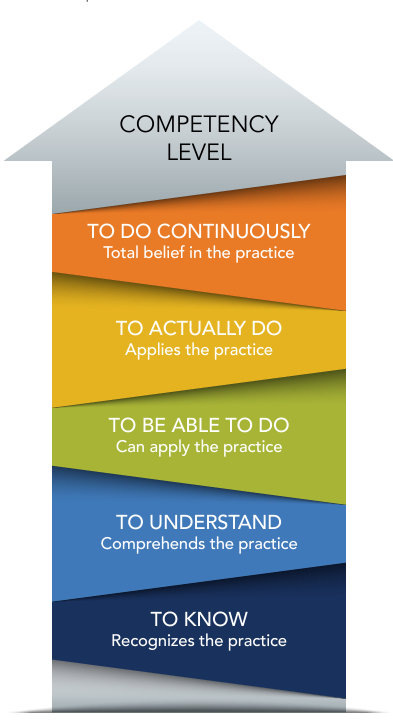
Moore and Vernon’s (2024) analysis of the limitations of the RJ field aligns with Parsons’. They conclude: “[T]he restorative movement has over-focused on defining and legitimating principles and under-focused on the mindset and skill set required to administer programs and facilitate processes.” RJ alters the roles and responsibilities of all individuals in the process, which makes it inherently more difficult to implement than initiatives that align with existing criminal justice mandates (Johnstone, 2002). For example, the extension of the public voice in restorative policing will sometimes require officers to act as facilitators and silent stakeholders rather than as decision-makers, a process that requires police officers to interpret and undertake their role in innovative ways (Paterson & Clamp, 2012). For officers to do this competently and confidently, they need to experience what this is like within their teams. As such, managers are crucial to the success or failure of frontline cultural change because they shape the behavior and thinking of the officers they supervise.
Managers need specific skills to supportively nudge their colleagues towards more effective ways-of-working—which most officers will support. Managers need to be able to support members of their work unit to contribute to constructive change. They need to involve members in reviewing and revising assumptions, practices, and priorities; ensure that marginalized members have a voice; and provide mechanisms for members to raise concerns constructively. All this work requires coordination. (Victorian Department of Justice, 2021, Section 8)
The successful adoption of restorative policing on the frontline therefore requires a significant shift in the sociocultural meaning of police work that highlights not only the benefits of restorative policing for street-level police officers but also how this new approach might alter the purpose and function of policing more broadly in the communities they serve (Clamp & Paterson, 2013). As Pollard (2001, pp. 166–167) states:
Restorative policing is not just about new approaches to juvenile justice … [I]t is also about shifting police culture towards a more problem-oriented, community style of policing … [and] most importantly of all, providing new processes and mechanisms to help strengthen communities, rebuild emotional and physical landscapes fragmented by crime, and improve the overall quality of life.
This revolutionary agenda requires officers to have, or to develop, a mindset that recasts their role as community leaders in addressing the harm caused by offending behavior; to use their discretion in such a way that prioritizes problem-solving and community support over crime control; and to see the community and other agencies as partners in responding to, and managing, conflict (Clamp & Paterson, 2013). This transformation crucially needs to take place through a process that provides police officers with the necessary skill set to adapt to such a dramatic change in their role. In the next section, I propose a framework for the implementation of restorative policing and explain how this might be achieved.
DEVELOPING AN EXPLICIT PRACTICE FRAMEWORK: THE POSSIBILITY OF RESTORATIVE POLICING
Since 2018, I have spent considerable time with police officers trying to understand what restorative policing is, and what it could mean, in a frontline policing context. This began with two one-day events on restorative policing that I hosted at the University of Nottingham in collaboration with Terry O’Connell (the senior police sergeant from the original Wagga Wagga pilot). Gary Knighton, Deputy Chief Constable at Derbyshire Constabulary, attended both these events, and he saw an overlap between the ideas underpinning the Wagga Wagga Model and the new values being prioritized in his constabulary. In particular, he viewed the Wagga Wagga Model as providing a framework through which the chief’s slogan of “do the right thing” and senior management’s recognition that officers wanted more voice in the organization could both be realized.
The timing of the events also aligned with a broader project taking place in Derbyshire Constabulary addressing the future of neighborhood policing. Neighborhood policing was to be based on the “three pillars” of crime prevention/early intervention, community engagement, and problem-solving (College of Policing, 2018). An internal review demonstrated that the safer neighborhood team were drawing on a range of “tools” or “training packages” to facilitate their approach, but the outcomes were highly variable. Greater emphasis on preventative activity and the development of an explicit practice framework meant the Wagga Wagga Model was thought to be a good fit for the constabulary to achieve its aims. Senior management believed that if all teams engaged with the public and each other in similar ways, more consistent and effective outcomes could be achieved. Critically, there was interest in understanding what restorative policing could look like in Derbyshire Constabulary and so, in 2019, Terry and I set about developing a pilot project to explore this further (Clamp, 2020).7
The chosen pilot site was a police station located in a lower socioeconomic neighborhood with complex needs, including significant police workforce demands in responding to issues arising from four children’s care homes in the area. The pilot was initiated through two extended visits to the police station. The first (25–29 March 2019) involved a series of informal voluntary drop-in sessions where officers discussed their experience of local policing, and we introduced the ideas underpinning restorative policing. The second (1–12 July 2019) entailed 11 four-hour mandatory training sessions attended by between three and six officers at a time. A total of 49 officers—including Police and Community Support Officers (PCSO), response officers, and sergeants—participated in the training. They received an overview of the theoretical and philosophical framework underpinning the Wagga Wagga Model and information packs to guide their practice when performing frontline and supervisory duties.
An evaluation of the training sessions, in the form of one-to-one interviews, took place between November 2019 and January 2020 at the station. A total of 43 out of the 49 officers who participated in the training sessions were interviewed, representing an 88% participation rate. The interviews consisted of 10 semistructured questions that asked officers about their experience of the training, what they learned, how useful they found the training, and if they could identify any shifts in their practice. Findings from these interviews indicated how abstract RJ concepts and theories can be operationalized for frontline policing practice.
THE KEY COMPONENTS OF AN EXPLICIT PRACTICE FRAMEWORK
In its fullest realization, restorative policing can help bring about a radical reframing of the way crime problems are viewed, as well as the solutions needed to respond to them. Along the way it can support a more relational approach to policing to improve how the police interact with each other and those they serve, as well as an openness to reflecting on what policing practice works and what needs to change (Clamp, 2020). To promote a shift to a better policing model, officers need to develop an explicit practice framework—an overlooked topic in RJ scholarship with a few exceptions (see, for example, Burton, 2006; Casey et al., 2014; O’Connell & McCold, 2004).
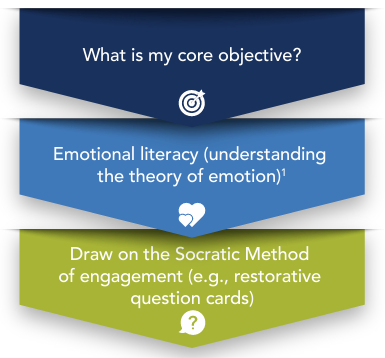
1. Identifying the Core Objective
The core objective for most officers in the training sessions was easily identifiable. They expressed a desire to “make a difference” as a principal motivation for joining the police, but they pointed to factors that drove crime (e.g., social-deprivation issues and impoverished social-support systems) and framed frontline policing (e.g., the current “catch and convict” model, a bureaucratic obsession with targets, and staffing issues) as limiting the amount of difference they believed they could make. As one response officer eloquently put it:
I think people come into the police now with a naive sense that they’re going to be able to change the world and save people and lock all the baddies away and it just isn’t the case … I enjoy everything that I do, but I just think you have to become accustomed to the fact that failure is quite a big thing in the police. (Clamp, 2020, p. 5)
When interviewees were asked to reflect on occasions when they felt they had made a difference, some gave examples that provided evidence (unwittingly) for the idea that what makes the greatest difference is the way people are treated. At the heart of facilitating change and moving toward deliberate action is helping officers to identify what makes a difference to them—and to the public— when undertaking their duties. When this has been identified, it is then possible for individuals to prioritize actions that make a difference. When officers focused on outcomes beyond their control, as opposed to what mattered most to them or the people they dealt with, there was less of a sense that they were making a difference. For example, one PCSO reflected:
No [I don’t think I make a difference]. I just think it’s because I am in such a small area that you go to a victim of crime and you do everything for them and then two weeks later, they report another crime. (Clamp, 2020, p. 7)
Response officers cited the lack of time they had to deal with problems in a meaningful way and the amount of non-crime cases that characterized their high workloads:
You think people only call the police when it’s an emergency and probably over 90% of it isn’t. Obviously mental health … not enough support … so we’re spending a lot more time on stuff that we perhaps shouldn’t be dealing with. So, then we don’t get time to spend more time on stuff like this [the training session] and actually trying to help people ... if we could spend more time with the repeat callers and actually direct them to the right place, they probably wouldn’t depend on us so much. But it’s just a cycle. (Clamp, 2020, p. 5)
This type of “failure” in policing is inevitable because it is impossible to eradicate the social conditions that create crime, and if officers focus on the things they cannot control, it will result in feelings of despondency. The training sessions sought to encourage officers to focus on what they could control (i.e., their interactions) and what mattered most to those that they were dealing with (i.e., respectful interaction). When those actions are prioritized, this will result in a more significant sense of purpose, leading to increased job satisfaction and improvements in morale. Indeed, as one response officer reflected, job satisfaction does not necessarily come from driving down crime but from recognition of a job done well:
Some months ago, there was reported anti-social behaviour in one of my areas … those complaints have died down … another example ... I ... reduce[d] the amount of reported shop thefts … but the nice feeling always comes back from that personal touch of someone thanking you. (Clamp, 2020, p. 6)
The only way to create the conditions for this to occur routinely is by having conversations internally, among officers, about what makes the greatest difference to them. The evaluation revealed there was limited shared understanding of the purpose of policing, no culture of questioning policing practice, and not enough opportunity to collaborate with colleagues across the different teams in the station. Addressing this deficit requires the underlying philosophy of restorative policing to extend beyond individual programs to frame senior police management styles and the core objectives of local policing (Alarid & Montemayor, 2012). As Shearing explains:
People think that they have made a difference when they have taught something; however, you only make a difference when it has been learned. Learning is not just an individual thing; you cannot learn if all the incentive structures stay the same as they were. (Interview, UCT, 10 May 2008)
In other words, if job satisfaction rests on recognition and positive interactions for frontline officers, but supervisors are focused on clear-up rates, then officers will increasingly deprioritize the former for the latter. To create a restorative culture, it is essential that space is created for structured conversations that identify priorities and develop shared ways of working to achieve agreed goals. This extends to shared and agreed ways of working between supervisors. One sergeant noted the importance of collaboration with other sergeants and the elements of the job that officers should be reflecting on together to make a difference:
I think it would be important to know that we’re all on the same page or if we’re not all on the same page to discuss the reasons why we’re not on the same page because for obvious reasons, if … all … sergeants are doing a completely different thing, then we’re never going to get anywhere. So, to be able to talk about it and say, “okay, this is what I’m doing, and this is why I think it works,” and then getting some feedback and having an honest discussion about it … [It] would also be a good opportunity to sort of discuss … morale or … crime numbers … loads of different things. (Clamp, 2020, p. 12)
Officers of all ranks need to have an explicit conversation about what matters in policing to develop consistent and professional practice that works, is ethical, and leads to “doing the right thing.” The training sessions advocated that to change practice, more protected time was needed to develop a consensus for working. This would require officers to:
- Explore and discuss why they do what they do (from a force/team/individual perspective).
- Identify what makes the greatest difference and what matters (to officers and the public).
- Work out what needs to change (within the force/team/oneself).
- Focus on what is possible (in the current climate/resources available/force/teams).
- Implement an agreed process to achieve identified priorities in a deliberative way.
Interviewees suggested that increasing interaction and collaboration between officers and different teams in the same station could be achieved by aligning shift patterns, sharing briefings at the beginning of a shift, and developing agreed objectives and ways of working on a regular basis. Thus, this restorative policing system incorporates peer reviews to promote deliberative accountability, moving away from key performance indicators (KPIs) and prosecution targets. This modeling is essential for police buy-in because it helps officers to understand the value of working in collaborative ways and prioritizing what works over process. As one sergeant reflected:
I am quite an open person anyway and I like to encourage honest conversation within the team. Prior to your attendance I was probably a little less forward with this (which might just have been because I am new to the role), but your input [training sessions] has given me the confidence to have these open conversations more regularly. We now discuss successes and things that didn’t go so well openly as a team, not only in briefings but throughout the day. I firmly believe that it is the role of the supervisor to provide a platform for their team to flourish and I believe that it is only by having these conversations and embedding this approach within the team that this will happen naturally out in public. For me, this is not an experiment; it is how I believe we should be working at all times. (Personal communication, 21 June 2019)
Having routine, structured conversations of this nature is essential for determining if what the team or officer is doing is still working or if things need to change. It also creates opportunities for deliberative consultation with supervisors and other team members in complex cases where “doing the right thing” is not immediately apparent. This also allows officers (regardless of seniority) to hold each other to account when practice does not align with what has been agreed. Importantly it increases collaborative problem-solving and a shared sense of purpose, essential ingredients for more positive interactions with the community. This method for adapting systems requires that the organization measures not simply easy-to-quantify activities, or group-level data on outcomes, but also the processes used to manage workplace relations, which can create and maintain a respectful and productive workplace (Victorian Department of Justice 2021, Section 8).
2. The Importance of Emotional Literacy for Better Outcomes
An essential skill for restorative policing is emotional literacy. Yet, emotional literacy is challenging for an organization with a high incidence of emotional suppression. Officers often use emotional suppression as a strategic response to evade perceptions of incompetence or weakness from peers and supervisors (Lennie, 2021) and as a coping mechanism in response to the demanding nature of their profession (Lennie et al., 2020). Traditional police culture has endorsed emotional detachment and depersonalization in police–public interactions (Lennie et al., 2020), posing a tangible impediment to the effective implementation of restorative policing at the frontline.
Recent scholarship has shed light on the detrimental consequences of the emotionally detached approach prevalent among officers, commonly known as the “blue wall of silence” (Crank & Crank, 2015). For example, Gittner’s study (2016) illustrates that when an officer’s language lacks references to specific individuals or situations, it can foster perceptions of a lack of dignity and respect, potentially increasing the likelihood of aggressive behavior exhibited by those individuals the officer is dealing with. Emotional dissociation is not only a risk for negative police–public interactions, but it has also been shown to be directly linked to the development of post-traumatic stress disorder among officers (Lennie et al., 2020). Some scholars contend that mitigating these adverse outcomes hinges on improving the emotional literacy of officers. As defined by Magny and Todak, emotional literacy is:
[A] general ability to acknowledge one’s own emotional state and keep one’s emotions and thoughts in balance while also recognizing emotions in others, managing interactions and relationships with them, and resolving conflict using empathy, emotional cues, and an awareness of social dynamics. (2021, p. 957)
Restorative “praxis” provides a useful framework for improving emotional literacy because it not only helps officers to understand how emotions drive reactions and interactions but also contains tried-and-tested techniques to manage emotions effectively. The Compass of Shame is a conceptual model that identifies four negative responses that people can display when coping with shame: withdrawal, avoidance, attacking oneself, or attacking others (Nathanson, 1992). The value of police officers understanding this theory is that it helps them to understand the impact their interactions can have on those they are dealing with, but also why individuals in front of them may be behaving in particular ways. If officers remain committed to a process that engages, particularly suspects, in a respectful way, it will have the effect of keeping attention on the unacceptable conduct of that person rather than creating the conditions where the suspect assumes a defensive attitude that obstructs meaningful and productive engagement.
A democratic style of policing—one that emphasizes fair, transparent, and respectful treatment of civilians and non-enforcement opportunities for community engagement—requires officers to be skilled in the principles and tactics of effective engagement and de-escalation (e.g., giving voice, practicing neutrality in dialogue with community members to counter negative stereotypes of police, providing the opportunity to affirm a positive self-image, and slowing down thought processes during discussions with the public). This style of policing has been shown to improve officer well-being (Burke, 2020), and emotional literacy also helps to keep officers safe (Clamp, 2020). If officers understand that behavior is triggered by emotions, it means that they can more intentionally stand back and let suspects emote, while engaging them calmly to the point where a reasonable conversation becomes possible. Hard options, including arrest and/or restraint, remain available but may be avoidable through de-escalation. This chimes with one response officer’s experience:
We went to a hospital guard, and [the suspect] was “oh, I’ve seen you before” and he was absolutely sound with me and the other cop that was there. Yet the two coppers that was with him before, he was not very pleasant with them. They ended up having to restrain him and stuff, whereas he just sat on the bed for us. (Clamp, 2020, p. 3)
While procedural justice theory (Tyler, 1990) has helped officers understand that treating members of the public with respect is important for perceptions of legitimacy, “Fair Process” (Kim & Mauborgne, 2003) outlines the ingredients for individuals to experience fairness: engagement, explanation, and expectation management. My evaluation highlighted that while police institutions spend time explaining what is happening to their officers, little time is invested in engaging officers, asking for their input, or managing their expectations by articulating why decisions have been made (Clamp, 2020). Officers replicate this type of interaction within the community by saying, “This has happened; you will do this; this is what is going to happen, and if you do not do it, these are the consequences.”
The established, imperative approach does not always work for officers or members of the community with whom they are dealing. Although there is an institutional and political desire to increase public confidence in policing, this will remain limited unless officers begin to experience the desired behavior themselves within their institution. Burke’s research shows that where “officers feel fairly treated within their agencies and when they are less psychologically and emotionally distressed, they report stronger support for policing tactics that increase fairness in police processes and decision making” (2020, p. 875). This provides support for the belief that frontline policing practice will naturally shift if the organization as a whole embraced reform, rather than just scrutinizing individual officer actions.
3. Using the Socratic Method for Better Interactions
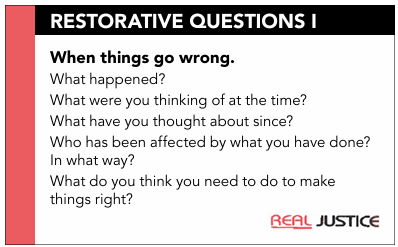
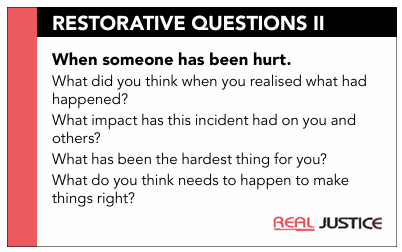
The question cards given to officers contained open-ended questions designed to keep people engaged and avoid creating dialogues where participants assume defensive postures. The evaluation demonstrated that where officers used the cards, they were more effective in eliciting voluntary confessions from offenders. For example, one response officer reflected:
There was a little girl that was very like closed … and she wouldn’t talk, head down, just nothing was coming out, it was either no or shrug. So, the questions made her open up a lot more, which I didn’t think was going to. I thought we was going to just be sitting there like for like half an hour with her not speaking … I’ve had other ones where like it’s just a simple criminal damage … I’ve had a kid going, “No, I’ve not done it” … With asking the questions and breaking down the barriers, he has eventually admitted, yes … You do find when you come to like a loggerhead with someone, you think, “There’s nothing more I can say, he’s not going to budge” … [T]he questions … get something more out of them, and out of the two I’ve done, I’ve got confessions out of both … which, if I didn’t have the questions, I probably wouldn’t have. (Clamp, 2020, p. 15)
The purpose of using the cards is not for securing confessions but rather creating the conditions for a meaningful conversation about what happened, why, and what to do in response to the incident. The questions are open-ended. They avoid “why” questions and “feeling” questions, which makes it much more likely that suspects will engage more openly with officers because the focus is on their experience. The questions are designed to guide people to come to conclusions on their own about their accountability and to figure out what the right thing would be going forward.
These outcomes also extend to using the cards when talking to victims. My interviews revealed that when officers used the cards, it enabled them to meet victims’ needs more effectively:
I went to speak to this lady about … a prowler … and I used the card then. What surprised me most is when ... [I asked], “What do you want us to do? What do you think can resolve the matter?” She was like, “Oh just a light at the back,” which surprised me because I thought it would be the classic, “Well, more police” … [W]hen you use that card, you expect people to give answers, but they don’t give those answers, if that makes sense? (Clamp, 2020, p. 16)
These vignettes demonstrate that restorative question cards can inform local policing, but this requires an understanding of the theory underpinning the approach rather than merely using the cards robotically. Officers I interviewed who understood this identified more ways the cards could be used to improve routine processes, including the collection of victim statements:
When you come to do your first victim statement, for example … they’re, “Oh what should I write?” and I was, “Well, here you go” [gives a card] … [T]hey like to have some tools coz taking statements sounds simple but it’s not because if you don’t know what to ask, how do you? You go to training school, and you’ll have 17 weeks there or whatever and you might write two statements or something but when you come to a really distressed victim, it’s completely different to taking one off your mate in a classroom, isn’t it? (Clamp, 2020, p. 21)
Some new recruits reported that they felt more confident in developing their own style of policing, as the following excerpt illustrates:
I think, especially with being so new into the police service, I’m kind of very much like you need to follow the book. You need to kind of do it this way, this way, this way, and you’re constantly asking advice of other colleagues, and how they deal with things. So, it was really good to kind of think, okay, all these kinds of open questions that you gave us, let’s see how I can find a resolution myself. Like how I would deal with something rather than just taking everyone else’s approach. (Clamp, 2020, p. 26)
Once new recruits arrive on section, they must operate in an environment where officers who are longer in service may not have similar attitudes or a willingness to engage with new ideas and practice. New recruits may shift their thinking and practice to align with those of their tutors and supervisors, as the excerpt above shows. Only focusing on new recruits, therefore, will likely mean the intended impact on practice may not materialize in frontline policing. Officers suggested that targeting both new recruits as well as supervisors and tutors is essential if this new way of thinking and working was to be sustainable. As one tutor explained:
So, every year around 600 new officers are going to arrive … No one at the minute … is going to teach them anything you’re talking about … So, if they are taught this when they come in, they’re going to arrive with an expectation of it. So then if we get the supervisors properly on board … then you’re attacking from the top and the bottom. So, we really need it in training school … How do you talk to people? Do we tell people how to talk to people? We tell them to be nice to them and understand them and listen to them, but they’re not taught how to understand them or how to listen to them ... or how to talk to them. (Clamp, 2020, p. 27)
Trained in restorative practice and an understanding of how to use tools like the restorative questions cards, it is expected officers will become more effective in their interactions with victims, suspects, and each other. Crucially, shifts in both mindset and skill set need to be engendered if institutional arrangements are not going to block reform efforts.
FINAL THOUGHTS
This article proposed an explicit practice framework as a starting point for a new policing model. Restorative practice can assist with improving interactions between officers and the communities they serve, but this cannot happen without also improving the interactions between officers inside policing institutions. The limited impact of RJ on frontline policing culture and practice stems from ingrained institutional arrangements. When seeking to integrate initiatives that depart from the traditional policing mandate of “catch and convict,” meaningful reform needs structural, behavioral, and attitudinal shifts at all levels of the policing hierarchy to prevail.
Achieving change requires a shift in mindset whereby frontline officers are involved in discussions about what policing priorities should be and in defining agreed ways of working to realize those objectives. It also requires two specific skill sets. First, officers need to become emotionally literate and see emotions as cues for more sensitive and informed interactions, rather than signals of personal threat to safety, well-being, and professionalism that need to be controlled or stifled. Second, officers need to become much more Socratic and allow suspects and victims to become part of the solution, rather than viewing them as problems that need to be managed. Should this framework be realized in practice, it promises to increase public support for the police, lead to outcomes that work for people, and improve the likelihood of police agencies retaining officers and recruiting diversely (Victorian Department of Justice 2021, Section 8).
In its fullest realization, restorative policing could help bring about a radical reframing of the way crime problems are viewed and our beliefs about what a good solution is (Clamp, 2018). Core elements of restorative policing echo Sir Robert Peel’s ninth principle of policing: “the test of police efficiency is the absence of crime and disorder, not the visible evidence of police action in dealing with it” (Reith, 1948, n.p.). Achieving this involves more effective interactions and outcomes. Restorative policing is proposed as an effective way to achieve these reasonable ambitions and to support a more relational approach to policing. Regardless of any previous drawbacks or obstacles to wholeheartedly adopting restorative policing, the current policing crisis demands we revisit the use of a restorative policing approach and explore its full potential to create a better model for frontline officers and the communities they serve.
REFERENCES
Alarid, L., & Montemayor, C. (2012). Implementing restorative justice in police departments. Police Practice and Research: An International Journal, 13(5), 450–463. https://doi.org/10.1080/15614263.2011.607654
Alder, C., & Wundersitz, J. (1994). Family conferencing and juvenile justice: The way forward or misplaced optimism? Australian Institute of Criminology.
Bazemore, G. (2000). Community justice and a vision of collective efficacy: The case of restorative conferencing. In J. Horney (Ed.), Policies, processes, and decisions of the criminal justice system (pp. 225–298). National Institute of Justice.
Blagg, H. (1997). A just measure of shame? Aboriginal youth and conferencing in Australia. British Journal of Criminology, 37(4), 481–501. https://doi.org/10.1093/oxfordjournals.bjc.a014193
Braithwaite, J. (1989). Crime, shame and reintegration. Cambridge University Press.
Braithwaite, J. (1994). Thinking harder about democratising social control. In C. Alder & J. Wundersitz (Eds.), Family conferencing and juvenile justice: The way forward or misplaced optimism? (pp. 199–216). Australian Institute of Criminology.
Braithwaite, J. (1999). Restorative justice: Assessing optimistic and pessimistic accounts. Crime & Justice, 25(5), 1–127. https://doi.org/10.1086/449287
Burke, K. (2020). Democratic policing and officer well-being. Frontiers in Psychology, 11, Article 874. https://doi.org/10.3389/fpsyg.2020.00874
Burns, J., Kelly, J., & Ellison, C. (2023, March 14). Over 1,500 police accused of violence against women and girls. BBC. https://www.bbc.com/news/uk-64915126
Burton, A. (2006). From restorative justice to an explicit affective practice. Developing Practice: The Child, Youth and Family Work Journal, 15(1), 36–43. https://search.informit.org/doi/abs/10.3316/informit.837663262631143
Camp J., & Heatherton, C. (2016). Policing the planet: Why the policing crisis led to Black Lives Matter. Verso Books.
Casey, M., Curry, W., Burton, A., & Gribben, K. (2014). A necessary discovery: Why the theory is important. In V. Kelly and M. Thorsborne (Eds.), The psychology of emotion in restorative practice (pp. 129–157). Jessica Kingsley Publishers.
Chan, J. (1996). Changing police culture. British Journal of Criminology, 36(1), 109–134. https://doi.org/10.1093/oxfordjournals.bjc.a014061
Clamp, K. (2018). Restorative policing for the 21st century: Historical lessons for future practice. In T. Gavrielides (Ed.), Routledge international handbook of restorative justice (pp. 177–192). Routledge.
Clamp, K. (2019). Restorative policing provision across England and Wales: Lessons from a national survey. Paper presented at The Restorative Justice Conference. Westminster Briefing.
Clamp, K. (2020). The policing conversation that matters: An evaluation of the Cotton Lane Input 2019 [Unpublished report]. Derbyshire Constabulary and the Office of the Police and Crime Commissioner.
Clamp, K. (2022). RJ and the code of practice for victims of crime: A scoping review of service provision in England and Wales. University of Nottingham. https://www.aarj.org.au/wp-content/uploads/2022/05/PCC-research-report-FINAL.pdf
Clamp, K., & O’Mahony, D. (2019). Restorative policing provision across England and Wales in 2018. [Unpublished research report]. https://www.academia.edu/38982954/RESTORATIVE_POLICING_PROVISION_ ACROSS_ENGLAND_AND_WALES_IN_2018
Clamp, K., & Paterson, C. (2013). An exploration of the role of leadership in restorative policing in England and Wales. In A. Normore & N. Erbe (Eds.), Collective efficacy: Interdisciplinary perspectives on international leadership (pp. 293–307). Emerald. https://doi.org/10.1108/S1479-3660(2013)0000020016
Clamp, K., & Paterson, C. (2017). Restorative policing: Concepts, theory, and practice. Routledge.
College of Policing. (2018, 28 June). Modernising neighbourhood policing guidelines for consultation. https://collegeofpolicing-newsroom.prgloo.com/resources/modernising-neighbourhood-policing-guidelines
Collins, D. (1998) Evaluation of the behavioural change program of the NSW [Sydney, Australia] police service [Internal document].
Crank, J. (2015). Understanding police culture (2nd ed.). Routledge.
Crosby, A., McClelland, A., & Sharpe, T. (2023, April 18). Data shows that police-involved deaths in Canada are on the rise. The Conversation. https://theconversation.com/data-shows-that-police-involved-deaths-incanada-are-on-the-rise-201443
Daly, K. (2001). Conferencing in Australia and New Zealand: Variations, research findings and prospects. In A. Morris & G. Maxwell (Eds.), Restorative justice for juveniles: Conferencing, mediation and circles (pp. 59–84). Hart Publishing.
Dzur, A., & McKnight, J. (2022). Refunctioning the police in Longmont. National Civic Review, 110(4), 6–16. https://www.jstor.org/stable/48646870
EMPAC. (2018). EMPAC roundtable on innovation in policing. East Midlands Policing Academic Collaboration. https://www.empac.org.uk/wp-content/uploads/2018/10/EMPAC-RESEARCH-INSIGHT-REPORT-INNOVATION-IN-POLICING-.pdf
Foster, J., & Jones, C. (2010). Nice to do and essential: Improving neighbourhood policing in an English police force. Policing: A Journal of Policy and Practice, 4(4), 395–402. https://doi.org/10.1093/police/paq040
Garland, D. (1996). The limits of the sovereign state: Strategies of crime control in contemporary society. The British Journal of Criminology, 36(4), 445–471. https://doi.org/10.1093/oxfordjournals.bjc.a014105
Geddis, D. (1993). A critical analysis of the family group conference. Family Law Bulletin, 3(11), 141–144.
Gittner, L. (2016). Law enforcement disconnect from the community. Cogent Social Sciences, 2(1), Article 1191322. https://doi.org/10.1080/23311886.2016.1191322
Goldsworthy, T. (2021, October 10). Australia had a record number of police shootings in the past year. Should we be concerned? The Conversation. https://theconversation.com/australia-had-a-record-number-of-policeshootings-in-the-past-year-should-we-be-concerned-169354
Grimshaw, R., & Jefferson, T. (2023). Interpreting policework: Policy and practice in forms of beat policing. Routledge.
Hines, D., & Bazemore, G. (2003). Restorative policing, conferencing and community. Police Practice and Research, 4(4), 411–427. https://doi.org/10.1080/15614260310001631307
Hoesktra, M. (2022). Messy victims and sympathetic offenders: The role of moral judgments in police referrals to restorative justice. Contemporary Justice Review, 25(2), 179–197. https://doi.org/10.1080/10282580.2022.2084087
Holland, B. (2007). View from within: The realities of promoting race and diversity inside the police service. In M. Rowe (Ed.), Policing beyond Macpherson: Issues in policing, race and society (pp. 165–188). Willan Publishing.
House of Commons (UK). (2018,12 December). Public health model to reduce youth violence (Debate pack number CDP-2018-0274). https://researchbriefings.files.parliament.uk/documents/CDP-2018-0274/CDP-2018-0274.pdf
Hoyle, C. (2002). Securing restorative justice for the “non-participating” victim. In C. Hoyle & R. Young (Eds.), New visions of crime victims (pp. 97–132). Hart Publishing.
Hoyle, C., Young, R., & Hill, R. (2002). Proceed with caution: An evaluation of the Thames Valley Police Initiative in Restorative Cautioning. Joseph Rowntree Foundation.
IOPC. (2023, 26 July). Public perceptions tracker summary report - 2022/23. Independent Office for Police Conduct. https://www.policeconduct.gov.uk/publications/public-perceptions-tracker-summary-report-202223
Johnstone, G. (2002). Restorative justice ideas, values, debates. Willan Publishing.
Johnston, L., & Shearing, C. (2003). Governing security: Explorations in policing and justice. Routledge.
Kelley, R. D. G. (2016). Thug nation: On state violence and disposability. In J. Camp & C. Heatherton (Eds.), Policing the planet: Why the policing crisis led to Black Lives Matter (pp. 15–33). Verso Books.
Kim, W., & Mauborgne, R. (2003). Fair process: Managing in the knowledge economy. Harvard Business Review, 81(1), 127–136.
Lennie, S.-J. (2021). A culture of silence and stigma around emotions dominates policing, officer diaries reveal. The Conversation. https://theconversation.com/a-culture-of-silence-and-stigma-around-emotionsdominates-policing-officer-diaries-reveal-152657
Lennie, S., Crozier, S. E., & Sutton, A. (2020). Robocop—the depersonalisation of police officers and their emotions: A diary study of emotional labor and burnout in front line British police officers. International Journal of Law, Crime and Justice, 61, Article 100365. https://doi.org/10.1016/j.ijlcj.2019.100365
Loftus, B. (2009). Police culture in a changing world. Oxford University Press.
McCold, P. (1998, November 7–9). Police-facilitated restorative conferencing: What the data show [Paper presentation]. Second Annual International Conference on Restorative Justice for Juveniles, Florida Atlantic University, and the International Network for Research on Restorative Justice for Juveniles, Fort Lauderdale, FL, United States. https://www.iirp.edu/images/pdf/policeconferencing.pdf
McCold, P. (2003). An experiment in police-based restorative justice: The Bethlehem (PA)project. Police Practice and Research, 4(4), 379–390. https://doi.org/10.1080/15614260310001631271
McCold, P., & Wachtel, B. (1998). Restorative policing experiment: The Bethlehem Pennsylvania Police family group conferencing project. Community Service Foundation. https://www.iirp.edu/images/pdf/BPD.pdf
Magny, O., & Todak, N. (2021). Emotional intelligence in policing: A state-of-the-art review. Policing: An International Journal, 44(6), 957–969. https://doi.org/10.1108/PIJPSM-01-2021-0008
Manning, P. (2002). Introduction. Policing: An International Journal, 25(1), 9–13.
Marshall, T. F. (1999). Restorative justice: An overview. Home Office. http://www.antoniocasella.eu/restorative/Marshall_1999-b.pdf
Mastrofski, S. D., Reisig, M. D., & McCluskey, J. D. (2002). Police disrespect toward the public: An encounter-based analysis. Criminology, 40(3), 519–552. https://doi.org/10.1111/j.1745-9125.2002.tb00965.x
Meadows, L., Clamp, K., Culshaw, A., Cadet, N., Wilkinson, K., & Davidson, J. (2010). Evaluation of Sheffield City Council’s community justice panels project. Hallam Centre for Community Justice. https://shura.shu.ac.uk/7053
Meyer, J. F., Paul, R. C., & Grant, D. R. (2009). Peacekeepers turned peacemakers: Police as mediators. Contemporary Justice Review, 12(3), 331–344. https://doi.org/10.1080/10282580903105897
Miers, D., Maguire, M., Goldie, S., Sharpe, K., Hale, C., Netten, A., Uglow, S., Doolin, K. Hallam, A., Enterkin, J., & Newburn, T. (2001). An Exploratory evaluation of restorative justice schemes. Home Office. https://kar.kent.ac.uk/2115/1/Uglow_exploratory_evaluation_2001.pdf
Minor, K. I., & Morrison, J. T. (1996). A theoretical study and critique of restorative justice. In B. Galaway & J. Hudson (Eds.), Restorative justice: International perspectives (pp. 117–136). Criminal Justice Press.
Moore, D., & Forsythe, L., & O’Connell, T. (1995). A new approach to juvenile justice: An evaluation of family conferencing in Wagga Wagga. A report to the Criminology Research Council. Centre for Rural Social Research, Charles Stuart University-Riverina.
Moore, D. B., & Vernon, A. (2024). Setting relations right in restorative practice: Broadening mindsets and skill sets. Routledge.
Nathanson, D. (1992). Shame and pride: Affect, sex, and the birth of the self. W. W. Norton.
NICJR. (2021). Reimagining public safety in Berkeley: Final report and implementation plan. https://berkeleyca.gov/sites/default/files/documents/BerkeleyReport_030722.pdf
O’Connell, T. (1996a). Safety in the community: Make it happen [Unpublished paper]. Restorative Justice Group, Human Resources & Development, Belfast, Northern Ireland.
O’Connell, T. (1996b, 2–4 July). Community accountability conferences [Paper presentation]. ACPO Summer Conference, Manchester, England.
O’Connell, T. (2008). Restorative justice pioneer Terry O’Connell awarded honorary doctorate. IIRP News. https://www.iirp.edu/news/restorative-justice-pioneer-terry-o-connell-awarded-honorary-doctorate
O’Connell, T., & McCold, P. (2004, 2–4 December). Beyond the journey, not much else matters: Avoiding the expert model with explicit restorative practice. Massey University International Conference on Restorative Justice, Albany, Auckland, New Zealand.
Ostrom, E. (1971). Institutional arrangements and the measurement of policy consequences applications to evaluating police performance. Urban Affairs Quarterly, 6(4), 447–476. https://doi.org/10.1177/107808747100600404
Paterson, C., & Clamp, K. (2012). Exploring recent developments in restorative policing in England and Wales. Criminology & Criminal Justice, 12(5), 593–611. https://doi.org/10.1177/1748895812441933
Phillips, S. (2015). Police discretion and boredom: What officers do when there is nothing to do. Journal of Contemporary Ethnography, 45(5), 580–601. https://doi.org/10.1177/0891241615587385
Polk, K. (1994). Family conferencing: Theoretical and evaluative concerns. In C. Alder and J. Wundersitz (Eds.), Family conferencing and juvenile justice: The way forward or misplaced optimism? (pp. 123–135). Australian Institute of Criminology. https://www.aic.gov.au/publications/lcj/lcj-3
Pollard, C. (2001). If your only tool is a hammer, all your problems will look like nails. In H. Strang & J. Braithwaite (Eds.), Restorative justice and civil society (pp.165–179). Cambridge University Press.
Ponsaers, P. (2001). Reading about community (oriented) policing and police model. Policing: An International Journal, 18(2), 470–497. https://doi.org/10.1108/EUM0000000006496
Reith, C. (1948). A short history of the British police. Oxford University Press.
Richards, K. (2010). Police-referred restorative justice for juveniles in Australia. Trends and Issues in Crime and Criminal Justice, 398, 1–8. https://search.informit.org/doi/10.3316/ielapa.846094200631694
Sandor, D. (1994). The thickening blue wedge in juvenile justice. In C. Alder & J. Wundersitz (Eds.), Family conferencing and juvenile justice: The way forward or misplaced optimism? (pp. 153–166). Australian Institute of Criminology. https://www.aic.gov.au/publications/lcj/lcj-3
Shearing, C. (2001). Transforming security: A South African experiment. In H. Strang & J. Braithwaite (Eds.), Restorative justice and civil society (pp. 14–34). Cambridge University Press.
Skogan, W. (2008). Why reforms fail. Policing & Society, 18(1), 23–34. https://psycnet.apa.org/doi/10.1080/10439460701718534
Strang, H., & Braithwaite, J. (1998). Pros and cons of police-led conferencing. In B. Sobey (Ed.), Diversionary Conferencing Advisory Committee Discussion Paper. Australian Federal Police Diversionary Conferencing Team.
Sykes, G., & Matza, D. (1957). Techniques of neutralization: A theory of delinquency. American Sociological Review, 22(6), 664–670. https://psycnet.apa.org/doi/10.2307/2089195
Tyler, T. R. (1990). Why people obey the law: Procedural justice, legitimacy, and compliance. Yale University Press.
Tyson, J., & Charman, S. (2022, November 1). Police officer resignations have risen by 72% in the last year – We asked former officers why. The Conversation. https://theconversation.com/police-officer-resignationshave-risen-by-72-in-the-last-year-we-asked-former-officers-why-188616
Umbreit, M. (1996). Restorative justice through mediation: The impact of programs in four Canadian provinces. In B. Galaway & J. Hudson (Eds.), Restorative justice: International perspectives (pp. 373–386). Criminal Justice Press.
Umbreit, M., & Zehr, H. (1996a). Family group conferences: A challenge to victim-offender mediation? VOMA Quarterly, 7(1), 4–8.
Umbreit, M., & Zehr, H. (1996b). Restorative family group conferences: Differing models and guidelines for practice. Federal Probation, 60(3), 24–29.
United Nations Development Programme. (2017). Definition for national institutional arrangements. https://ggim.un.org/ggim_20171012/docs/meetings/4th%20HLF/DEFINITION%20FOR%20NATIONAL%20INSTITUTIONAL%20ARRANGEMENTS.pdf
VEOHRC. (2015). Independent review of Victoria police. Victoria Equal Opportunity & Human Rights Commission. https://www.humanrights.vic.gov.au/legal-and-policy/research-reviews-and-investigations/police-review
Victorian Department of Justice. (2021) Redress and restorative engagement scheme: Restorative engagement program handbook. (Internal departmental documentation provided to participating members of Victoria Police Command.)
Willis, J. J., Mastrofski, S., & Kochel, T. (2010). The co-implementation of Compstat and community policing. Journal of Criminal Justice, 38(5), 969–980. https://doi.org/10.1016/j.jcrimjus.2010.06.014
Wojslawowicz, A., Doan, R., Fish, J., & Spencer, J. (2023). Gauging the impact of negative media publicity on career decisions: Exploring police recruit motivations during a recruitment crisis. Policing: An International Journal, 46(2), 383–400. https://doi.org/10.1108/PIJPSM-12-2022-0149
NOTES
- The author would like to acknowledge the background research undertaken by Rebecca Nye, a research assistant on my project looking at RJ and defunding the police, which has helped inform the content of this section.
- It is important to note that “policing” can be thought of as a process, or a mode of social control, which is conceptually separate from “the police” as an institution who are responsible for specific policing activities (Johnston & Shearing, 2003). When policing agencies, beyond the state police, work together without formal recourse to the law and coercive force, they are increasingly likely to operate as active social agents with distinct operational missions who divert offenders away from formal legal and judicial processes. Because of this, transformations in the purpose of policing need to be understood as being driven by a much broader transformation in the configuration of policing, justice, and security. For a great example of where this is happening in Australia, see the Police Restorative Engagement and Redress Scheme (Victorian Department of Justice, 2021).
- See Braithwaite’s (2021) excellent article that explores community-oriented, problem-oriented, peacekeeping, and restorative justice in much more detail than I have had space to here.
- For more information about the evaluations, read Moore and Forsythe (1995) for the Wagga Wagga outcomes and Collins (1998) for the outcomes of the Waratah program.
- While net-widening is not inherently problematic where meaningful contact and support is provided to those at risk of behaviors that could be criminalized, this is currently not a core function of contemporary policing.
- Practice has been largely shaped by the introduction of Final Warnings in 2000 (see Home Office 2002); the introduction of youth restorative disposals and community resolutions in 2008 (see HM Government 2008); the development of youth conditional cautions in 2010 (see MoJ 2013) and a simplified out-of-court disposal framework pilot for adults in 2014 (see NPCC 2017). Policy and practice reports on restorative justice have also raised the profile and initiated new developments in policing, including: (1) Assistant Chief Constable Gary Shewan’s Business Case for Restorative Justice and Policing (2010), (2) the Association of Chief Police Officers’ Guidance and Minimum Standards on Restorative Justice (2011), (3) the subsequent Ministry of Justice Restorative Justice Action Plan (2012), and (4) the Code of Practice for Victims of Crime (2021).
- My evaluation yielded some interesting insights, but it is important to note this was an exploratory pilot study. More sustained research on this needs to be conducted to ascertain the full potential of restorative practice for frontline officers and the institution of policing more broadly.